
Watch: Trump Spars With “Worst Reporter” Over Stupid Question
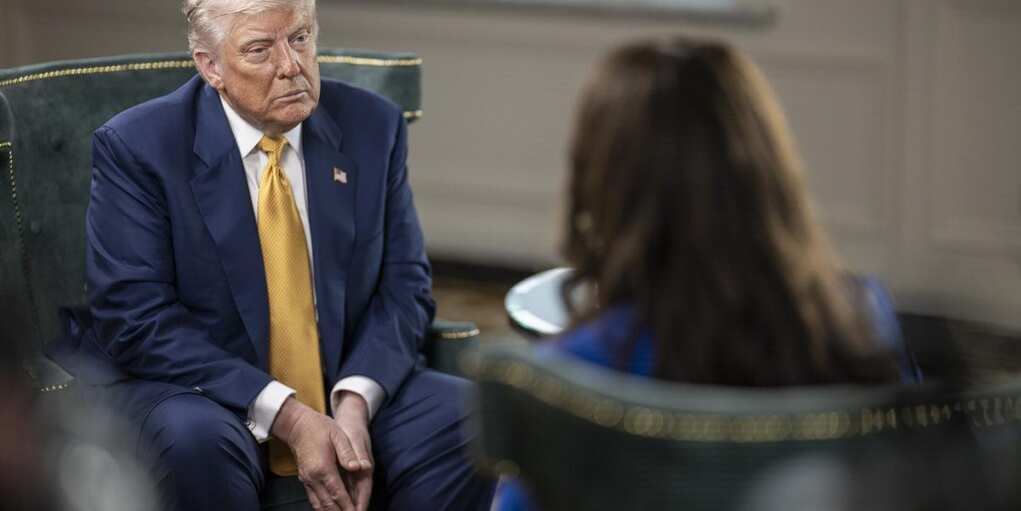
Kaitlan Collins had her moment planned.
The Epstein files had just dropped. Three million pages. Names everywhere. The biggest document release in the history of the case.
Trump’s name wasn’t connected to the island. Wasn’t on the flight logs. Wasn’t in witness testimony linking him to criminal activity.
Collins walked into the press availability anyway and tried to create the connection that the documents didn’t.
She left with the worst 90 seconds of her career.
The Setup That Backfired
Collins opened with what she thought was a trap.
“On the Epstein files, you talk about Democrats who were there. Elon Musk was also in there, and so was your commerce secretary, Howard Lutnick, and correspondence that he had with him.”
Notice the framing. She didn’t say Trump was in the files. She couldn’t — because he wasn’t connected to the island or the criminal activity. So she pivoted to people adjacent to Trump — Musk and Lutnick — and implied guilt by association.
“I’m sure they’re fine,” Trump responded.
He wasn’t taking the bait. Collins needed him to either defend Musk and Lutnick — creating a clip of Trump defending people “in the Epstein files” — or distance himself from them, creating a different kind of headline.
He did neither. He dismissed the premise entirely.
“Nothing Came Out About Me”
Collins pressed on the redactions. Epstein survivors had complained that witness interviews were blacked out. She framed it as a justice issue.
Trump cut through it.
“I think it’s really time for the country to get on to something else, now that nothing came out about me.”
That single sentence contains the fact Collins was trying to bury: three million pages of Epstein documents were released, and Donald Trump was not implicated.
Not tangentially. Not ambiguously. Not with caveats. The documents cleared him.
Collins’ entire line of questioning was designed to create the impression of guilt despite the absence of evidence. Trump stated the conclusion she was trying to prevent her audience from reaching.
“You Are the Worst Reporter”
Collins kept pushing. She invoked survivors of sexual abuse.
Trump responded with the kind of direct assessment that drives CNN producers insane.
“You are so bad. You are the worst reporter. No wonder CNN has no ratings, because of people like you.”
Then he got personal in a way that revealed genuine observation.
“She’s a young woman. I don’t think I’ve ever seen you smile. I’ve known you for 10 years. I don’t think I’ve ever seen a smile on your face.”
It’s a strange comment on the surface. But underneath it is something sharper: you’re not a journalist seeking truth. You’re a performer executing a role. And the role requires permanent hostility that you wear on your face every day.
“You know why you’re not smiling? Because you know you’re not telling the truth, and you’re a very dishonest organization, and they should be ashamed of you.”
Collins Posted It Herself
Here’s the most revealing part.
Collins posted the exchange on her own social media. She captioned it: “President Trump argues the country should move on from the Epstein files and lashes out when asked about the survivors’ response.”
She thinks this makes her look good.
In the CNN bubble, getting yelled at by Trump is a credential. It’s proof of bravery. It’s the clip you put on your reel. Your colleagues congratulate you. Your producers celebrate the confrontation.
Outside that bubble, the audience sees something different: a reporter who had evidence that Trump was cleared by the documents, who chose to imply guilt anyway, and who wrapped it in the moral authority of abuse survivors to make the implication unanswerable.
That’s not journalism. That’s manipulation using victims as shields.
The Redactions Deflection
Collins’ pivot to redactions was tactically clever.
Epstein survivors have legitimate grievances about redacted testimony. Their pain is real. Their desire for full transparency is justified.
But Collins wasn’t advocating for survivors. She was using their complaints to imply that the redactions were hiding something about Trump — despite zero evidence that any redacted material involves him.
The redaction issue is real and deserves serious coverage. What it doesn’t deserve is being weaponized as an innuendo delivery system against a president the documents specifically didn’t implicate.
Survivors deserve better than having their suffering deployed as a rhetorical tool by a reporter chasing a clip.
CNN’s Ratings Explain the Strategy
Trump mentioned CNN’s ratings for a reason.
CNN’s viewership has collapsed. Prime-time numbers that once dominated cable news have fallen to levels that barely register against competitors. The network has cycled through formats, anchors, and strategies without reversing the decline.
Collins’ approach — confrontational, hostile, designed to generate viral clips rather than information — is CNN’s survival strategy. If you can’t attract viewers with reporting, attract attention with conflict. If you can’t win on substance, win on spectacle.
The Epstein exchange was perfect for CNN’s purposes. Collins gets a clip of Trump calling her the worst reporter. She posts it. It goes viral. CNN’s social media numbers spike. Advertisers see engagement metrics. The business model is sustained for another cycle.
Information was never the point. Attention was the point.
What Actual Journalism Would Look Like
A journalist covering the Epstein files would ask:
Which public figures are implicated by the documents? What new evidence of criminal activity has emerged? Which victims have been identified? What do the unredacted portions reveal about Epstein’s network?
Collins didn’t ask any of those questions. She didn’t pursue the story. She pursued Trump.
The documents contain revelations about Clinton. About Prince Andrew. About prominent figures across politics, finance, and entertainment. Three million pages of potential leads.
Collins used her access to the president of the United States to ask him about documents that don’t mention him — while ignoring the documents that do mention others.
That’s not journalism. That’s target fixation masquerading as accountability.
Trump Won the Exchange
Collins posted the video thinking she’d won.
She didn’t.
Trump stated the central fact: the documents cleared him. He identified Collins’ dishonesty. He connected her approach to CNN’s declining credibility and ratings. And he delivered it all with the kind of unfiltered directness that his supporters love and his opponents can never match.
Collins got her clip. Trump got the truth on the record.
The clip will circulate on social media for a day. The truth — that three million pages of Epstein documents don’t implicate Donald Trump — will circulate forever.
And somewhere at CNN, Kaitlan Collins is still not smiling.