
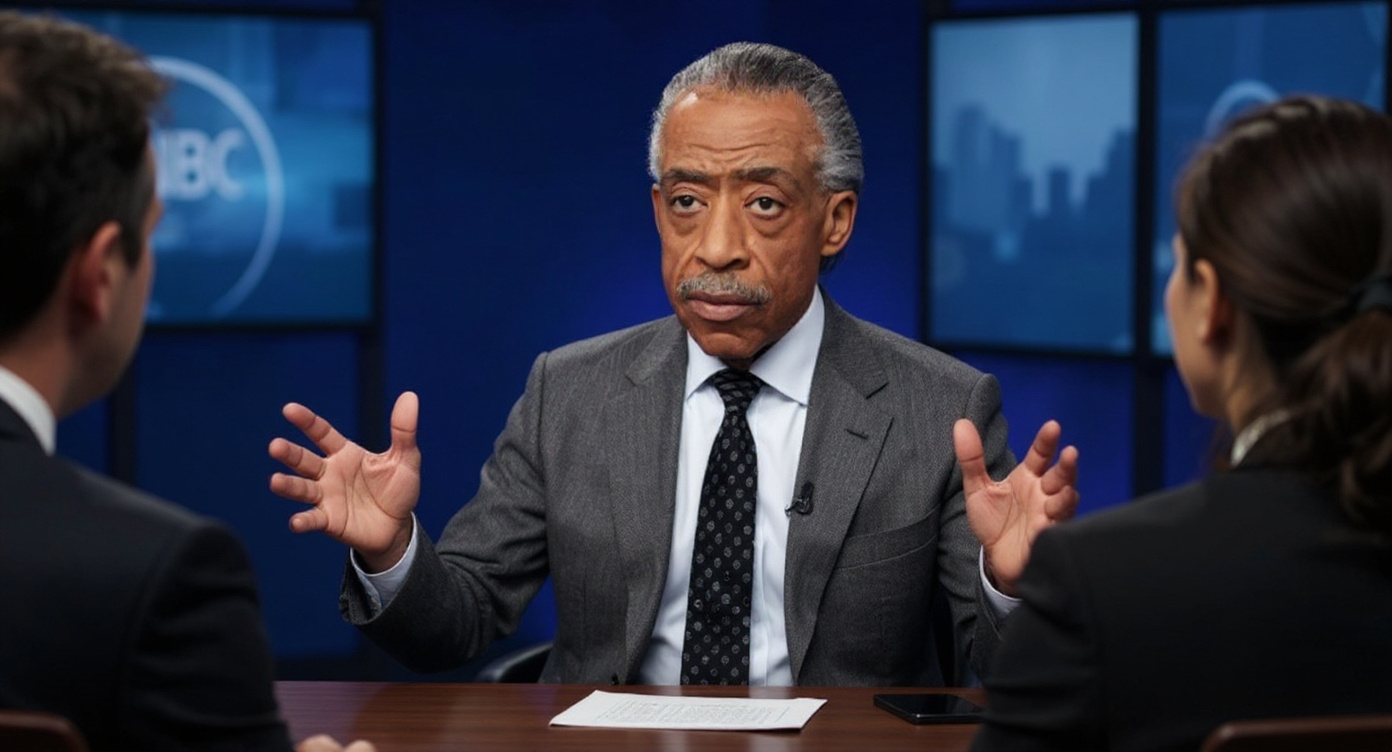
Al Sharpton went on MSNBC's Morning Joe on November 25 and told the American viewing public that there is "no genocide in South Africa, no racism there." That's a direct quote. The man said it with his whole chest.
This is the same Al Sharpton who has spent forty years finding racism in traffic stops, restaurant seating charts, and weather forecasts.
Host Jonathan Lemire was busy working a different angle during the segment, arguing that "if you are looking to make a big play on immigration like this, I don't know, maybe you don't appoint Stephen Miller as chief of staff." The panel's real target wasn't South Africa — it was the Trump administration's decision to treat the persecution of white South African farmers as a legitimate immigration and foreign policy concern. Sharpton's claim was the rhetorical cover: if there's no racism, there's no persecution, and therefore no reason for Trump to act.
The problem is the facts. South Africa's farm attacks are extensively documented by civil rights organizations, journalists, and the South African government's own crime statistics. White farmers have been targeted in violent home invasions and murders at rates that have drawn international attention for years. The government's land expropriation policies have explicitly targeted white landowners. President Trump has made the issue a foreign policy priority precisely because the evidence is overwhelming.
Sharpton didn't engage with any of that. He skipped straight past the documented attacks, past the land seizures, past the emigration data, and landed on "no racism there" like a man stepping over a body to compliment the carpet.
Fellow panelist Molly Jong-Fast contributed her own analysis: "Remember, the minority leader in the House is going to be Jim Jordan. These are not people who want — are consensus builders." The segment wasn't a discussion of South African human rights. It was a roundtable exercise in finding reasons to oppose whatever Trump does next, and Sharpton's contribution was to erase an entire country's racial crisis to score the point.
The segment was built around a Hugh Hewitt opinion piece, which the panel treated less as an argument to engage and more as a piñata. NewsBusters flagged the exchange as one of MSNBC's more brazen reality inversions — and the competition for that title is stiff.
Sharpton built a career on the premise that racism is systemic, invisible, baked into every American institution, lurking in places most people would never think to look. He's found it in corporate boardrooms, police departments, school curricula, and cable television lineups. His entire public identity rests on the claim that racism hides in plain sight and only people like him can see it.
South Africa doesn't even bother hiding it. The racial targeting is in the legislation. It's in the crime reports. It's in the emigration numbers of families fleeing for their lives.
Sharpton looked at all of it and saw nothing. The one country where racial persecution is government policy, documented, and ongoing — and the man whose career depends on finding racism everywhere found none at all.
He didn't say the situation was complicated. He didn't say it was overstated. He said there is no racism there.
That's not a foreign policy position. That's a tell.