
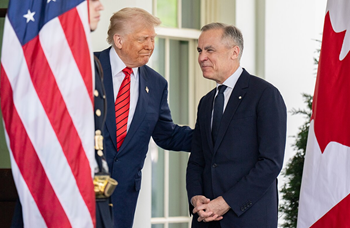
On June 30th, Canadian Prime Minister Mark Carney posted a 17-minute video to YouTube. In it, the man who replaced Justin Trudeau announced he was scrapping the consumer carbon tax, removing the oil and gas pollution cap, and expanding liquefied natural gas exports. He also accepted higher emissions projections — the ones Trudeau spent years swearing would never come to pass.
This wasn't a policy pivot. It was a confession.
Carney framed it in geopolitical language, as politicians do when they're burying a predecessor's legacy. "The certainties of the world of 2015 are long gone," he said. "Our neighborhood hasn't been this hostile since Canada was founded." He added, "The world hasn't been this unstable geopolitically since the end of the Second World War."
Translation: the climate posturing was affordable when everybody liked us and oil was someone else's problem. Now it isn't, and the adults need the checkbook back.
Carney's moves amount to abandoning climate alarmism and embracing what made the country wealthy in the first place. He's proposing a new West Coast pipeline with a capacity of one million barrels per day, plus a west-east crude oil pipeline running from Alberta to Ontario. For context, 90 percent of Canada's energy currently ships to the United States. Carney wants to diversify into Asian markets — which requires exactly the kind of infrastructure Trudeau spent 11 years blocking, delaying, or strangling with regulatory tape.
Eleven years of hesitant energy investment. That's not a policy disagreement. That's a generational economic wound inflicted by a prime minister who thought the world would reward Canada for being virtuous about carbon.
The world did not.
Conservative Party leader Pierre Poilievre had been hammering the carbon tax for years, calling it exactly what Carney is now quietly admitting it was — costly and divisive. Carney has been in office for 15 months. In that time, he's methodically dismantled the policy architecture Trudeau treated as his signature achievement. The carbon tax is gone. The emissions cap is gone. The pipeline restrictions are being reversed.
For reference, Germany built a floating storage and regasification unit — an FSRU — in 200 days when it needed emergency energy infrastructure after the Russia-Ukraine crisis. Canada, under Trudeau, couldn't get a pipeline approved in over a decade. The difference wasn't engineering. It was ideology.
Carney still faces the annual USMCA trade agreement review with the United States, which gives Washington real leverage over Canadian energy policy. That's part of the urgency. But the deeper driver is simpler: Canada's economy needs fossil fuel revenue, and the previous government pretended it didn't.
Trudeau told Canadians the carbon tax would save the planet. Carney just told them they need a million-barrel pipeline to save the country. Both can't be true — and only one of them is building it.