
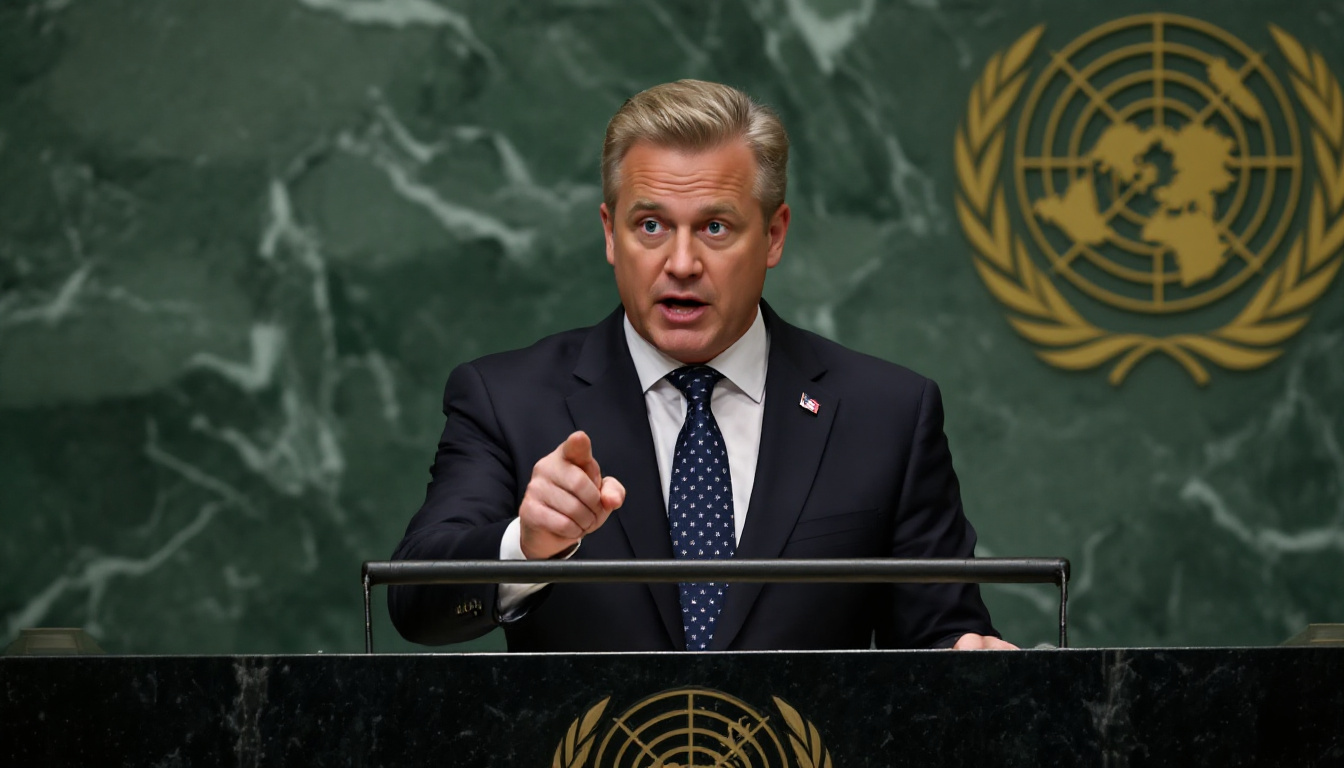
"I'm the representative of the United States of America. Back up! Back up, Ambassador. Back away! This isn't Havana."
That was U.S. Ambassador to the United Nations Mike Waltz on Tuesday, standing at the General Assembly podium while Cuban Foreign Minister Bruno Rodríguez Parrilla physically advanced toward him during his remarks.
The Cuban diplomat didn't get very far.
The confrontation happened during the annual General Assembly debate over the decades-old U.S. embargo on Cuba — a session where Havana's representatives typically get to grandstand about American cruelty while the room nods politely. This year, Waltz apparently wasn't interested in playing along. When Rodríguez Parrilla and the Cuban delegation attempted to interrupt his remarks and the foreign minister moved toward the podium, Waltz didn't flinch.
"This is America, my friend. This is the United Nations. This isn't your communist dictatorship. You cannot silence me," Waltz said, according to Fox News.
He followed that with a line that landed like a hammer: "This individual needs to back away from this podium. He's not going to intimidate me."
The video went viral within hours. Waltz standing firm, finger pointed, voice raised but controlled — while a representative of one of the Western Hemisphere's last communist dictatorships tried to physically impose himself on an American ambassador's speaking time. The General Assembly president had to intervene to restore order.
Rodríguez Parrilla, once he was finally given the floor through proper channels, called Waltz a liar. "Mr. Waltz is lying yet again," the Cuban foreign minister said, characterizing Waltz's remarks as "beneath the dignity of this forum."
The "dignity of this forum" line is worth pausing on. This is the same General Assembly that has seated representatives from North Korea, Iran, Syria, and Venezuela without batting an eye. The same body that has passed more resolutions condemning Israel than every other country on earth combined. Cuba's idea of diplomatic dignity involves jailing journalists, banning opposition parties, and running an island of 11 million people like a family business for six decades.
Waltz later posted on X that Cuban "Communist leaders" didn't want disclosure of their "luxury real estate portfolio" — a reference to the regime's well-documented pattern of hoarding wealth while ordinary Cubans line up for bread rations.
The contrast matters. For years, American ambassadors at the UN treated these sessions like something to endure — sit quietly, read prepared remarks, avoid making waves. The Obama era practically invented the diplomatic cringe: apologize first, engage second, never raise your voice. The result was a decade of American representatives getting steamrolled by governments that imprison their own citizens for owning a VPN.
Waltz didn't apologize. He didn't yield. He told a representative of a communist dictatorship — to his face, on the General Assembly floor, on October 27, 2026 — that he wasn't going to be silenced or intimidated.
The Cuban delegation sat back down.