
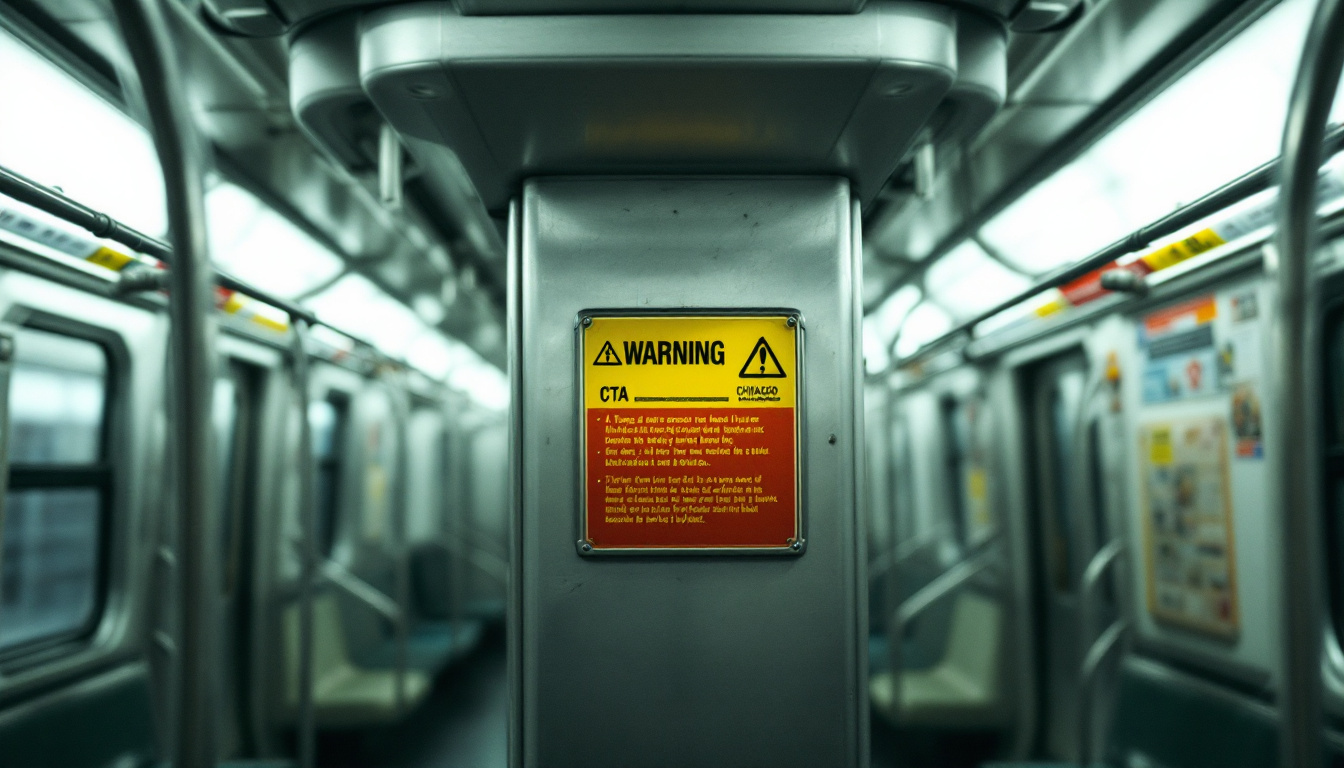
The signs read: "Violence on the CTA will not be tolerated. The Cook County State's Attorney's Office will prosecute and seek pretrial detention for all violent offenses on public transit."
There are 7,000 of them. One for every vehicle in the Chicago Transit Authority fleet.
Cook County State's Attorney Eileen O'Neill Burke and Acting CTA President Nora Leerhsen announced the campaign this week, deploying the signs across more than 1,500 railcars and nearly 2,000 buses. The idea is that someone about to commit a violent crime on the Red Line will read a laminated placard, reconsider their life choices, and peacefully exit at the next stop.
"In order to have a safe and thriving city, we need to have a safe public transportation system," Burke said at the announcement. She added that her office is "committed to doing everything we can to make our public transportation system the safest in the nation."
This is a city that has spent decades telling us it's serious about crime while producing results that suggest the opposite. The CTA has been a punchline for years — viral videos of assaults, robberies in broad daylight, riders who treat the train like a cage match. The response from city leadership has ranged from "we're monitoring the situation" to "transit crime is actually down" to, now, signage.
The signs don't add a single officer to a platform. They don't change bail policy. They don't put a detective on a case. They communicate, in government-approved language, that the government would prefer it if you didn't assault people on the bus. Which, yes, was already the law.
Burke took office on December 1, 2024, and the enforcement metrics under her tenure are legitimately better than her predecessor's. But when you hold a press conference to unveil signs — signs that say, essentially, "please don't commit felonies" — you're telling the public that your strategy includes a communications component aimed at people who commit felonies. The audience for that sign is, by definition, someone weighing whether to commit a violent crime on a bus. And the sign is supposed to tip the scales.
In Chicago, the performance of governance always seems to matter more than governance itself.