
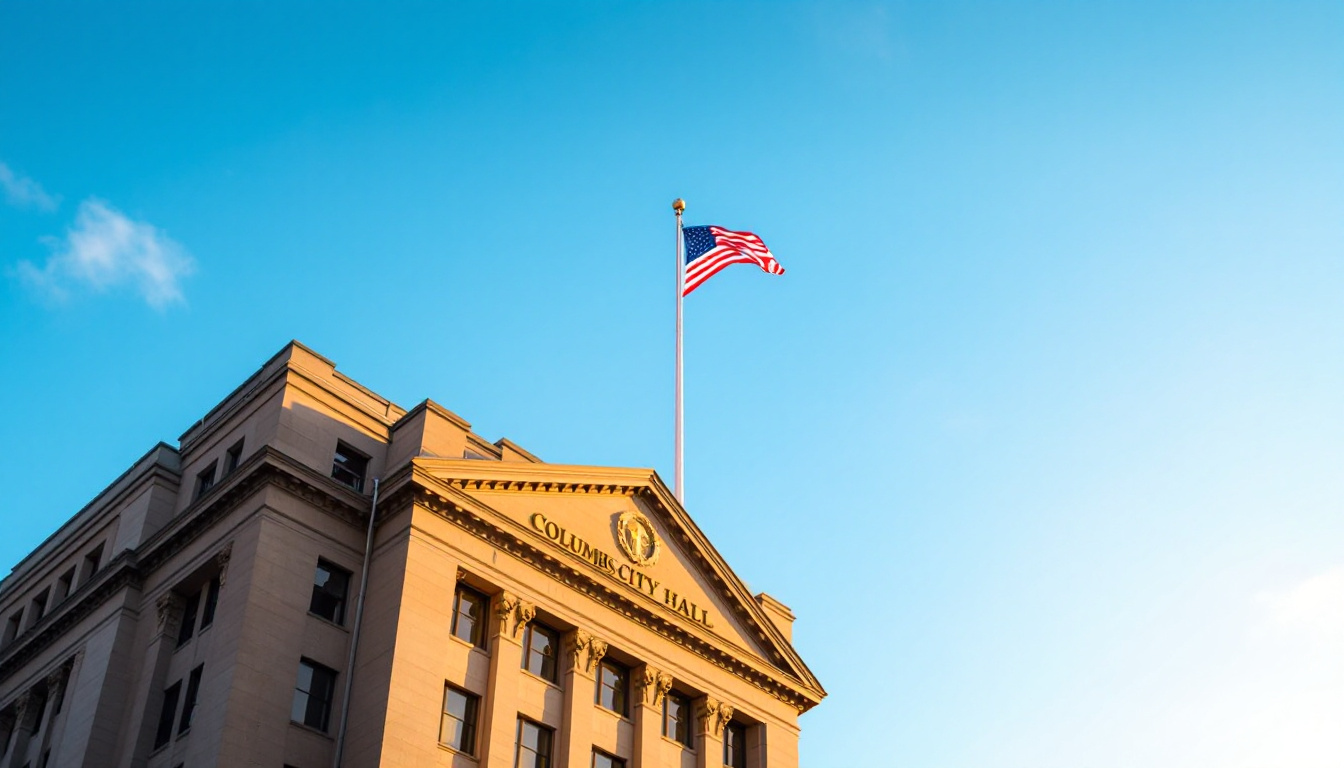
The Columbus Recreation and Parks Department posted on July 1 that City Hall would raise the Somali flag to "celebrate Somali independence." America's 250th Independence Day is three days away.
The post lasted about as long as a snowball in August.
The backlash was immediate and overwhelming. Senator Bernie Moreno, Republican of Ohio, responded bluntly: "There is only one nation's flag that should ever be flown on American government buildings." Rep. Brian Stewart of Ohio's 12th district criticized the move as a patronizing approach that actively discourages assimilation. Brigitte Gabriel of ACT for America called it "cultural surrender."
Journalist Luke Rosiak captured the general mood of the internet with two words: "Excuse me?"
The Columbus mayor's office scrambled into damage control, releasing a statement that read like a hostage letter written by a PR intern: "A social media post created by a city department falsely stated that City Hall would raise the Somalian flag in recognition of Somali Independence Day... this post was inaccurate and has been deleted." Note the careful phrasing there — the post was "inaccurate," not wrong, not a bad idea. Just "inaccurate." As if a rogue intern simply got the facts wrong and the city would never dream of such a thing.
No apology. No explanation of how an "inaccurate" post made it through whatever passes for a review process at Columbus Recreation and Parks. No acknowledgment that maybe — just maybe — someone in city government thought this was a perfectly fine idea until the replies started rolling in.
The timing alone tells you everything about how disconnected these bureaucracies have become from the people they serve. We are days away from the semiquincentennial — 250 years of American independence — and a city department's first instinct is to commemorate a foreign nation's independence on government property. Columbus has a significant Somali-American population, and nobody begrudges anyone their heritage. But there's a difference between cultural appreciation and raising a foreign sovereign flag over an American government building, and that difference used to be obvious.
The delete-and-deny strategy is its own kind of confession. An institution that believed in the decision would defend it. Columbus didn't defend it because Columbus knew it couldn't — not three days before the Fourth of July, not while American flags are going up on every porch in the state. So they memory-holed the post and called it "inaccurate," hoping the internet would forget.
Screenshots, of course, are forever. And the mayor's office just taught every city department in America the same lesson: when you post something that reveals what you actually think, deleting it only confirms the suspicion.
The Somali flag isn't going up over Columbus City Hall this week. The American flag is. But somewhere in that Recreation and Parks Department, somebody thought it was a good idea — and nobody in the approval chain stopped it until Twitter did.