
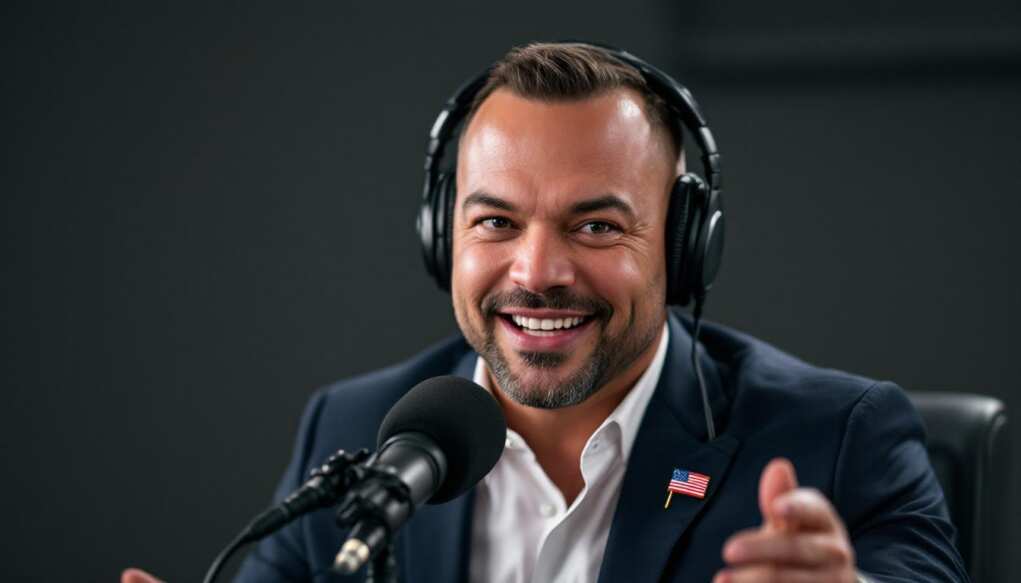
Former FBI Deputy Director Dan Bongino just went on Sean Hannity’s podcast and casually revealed that he spent his time at the Bureau running counter-intelligence operations — not against foreign adversaries, but against FBI agents who were leaking to the media. He fed suspected leakers false information and then waited to see which fake details showed up in news reports.
A podcaster outfoxed the FBI using the FBI’s own playbook. We are living in the greatest timeline.
Bongino described the technique as a “canary trap” — you give different people slightly different versions of the same information, and when one version shows up in a reporter’s story, you know exactly who the rat is. It’s literally the oldest trick in the intelligence community. And it worked on the people who are supposed to BE the intelligence community.
The backdrop here is important. Bongino served as Deputy Director under FBI Director Kash Patel for nearly a year, leaving the post in January 2026. And according to Bongino, the Bureau was basically two agencies operating under one roof. On one side, you had serious investigators doing actual law enforcement work. On the other side — and these are his words — you had “snakes.”
“There were two FBIs,” Bongino told Hannity. One trying to help you solve problems, “and then you had this other FBI… unfortunately, ‘snakes’ is being nice.”
Snakes. The former Deputy Director of the Federal Bureau of Investigation is calling his own agents snakes. And honestly? After everything we’ve watched the FBI do over the past six years — the Russia hoax, the suppressed Hunter Biden laptop, the raid on Mar-a-Lago, the targeting of parents at school board meetings — “snakes” might be the most generous description available.
What makes this truly beautiful is the irony. The FBI is America’s premier law enforcement and counter-intelligence agency. They’re supposed to be the ones running these operations on foreign spies and domestic criminals. Instead, a former Secret Service agent turned conservative media personality had to run the playbook ON THEM because they couldn’t stop their own people from feeding classified information to journalists.
Bongino said the biggest challenge was figuring out who could be trusted — even with outside vetting, the factional warfare inside the Bureau made it nearly impossible to know who was loyal to the mission and who was loyal to the resistance. So he did what any good intelligence operative would do: he set traps.
Now, Bongino didn’t name specific agents. He didn’t name specific media outlets. His “John Smith” example was explicitly a placeholder. But the message was loud and clear — we caught you, we know who you are, and the era of FBI agents moonlighting as anonymous sources for the Washington Post is over.
(Side note: can you imagine being one of those leakers right now? You thought you were being so clever, feeding juicy tidbits to your favorite reporter over cocktails, and the whole time the Deputy Director was feeding YOU garbage just to watch you run with it. That’s got to sting.)
Bongino left the Bureau amid some disputes over the Jeffrey Epstein files — because of course the Epstein files are involved somehow; that story touches everything — and caught criticism for being too active on social media during his tenure. Which, honestly, is the most FBI complaint imaginable. “Sir, your tweets are undermining institutional norms.” Meanwhile, actual agents are leaking like a screen door on a submarine and nobody in management blinked.
The larger point here is one we’ve been making for years: the FBI has a loyalty problem. Not a resources problem. Not a training problem. A loyalty problem. Too many agents decided their real job was undermining elected leadership they personally disagreed with. They turned the Bureau into a political weapon and then acted shocked — SHOCKED — when new leadership showed up and started cleaning house.
Bongino just proved it with receipts. He fed them fake intel. They ran to their reporter friends with it. He caught them.
The nation’s top law enforcement agency got played by a guy whose previous job was hosting a podcast. If that doesn’t tell you everything you need to know about the state of the FBI, nothing will.