
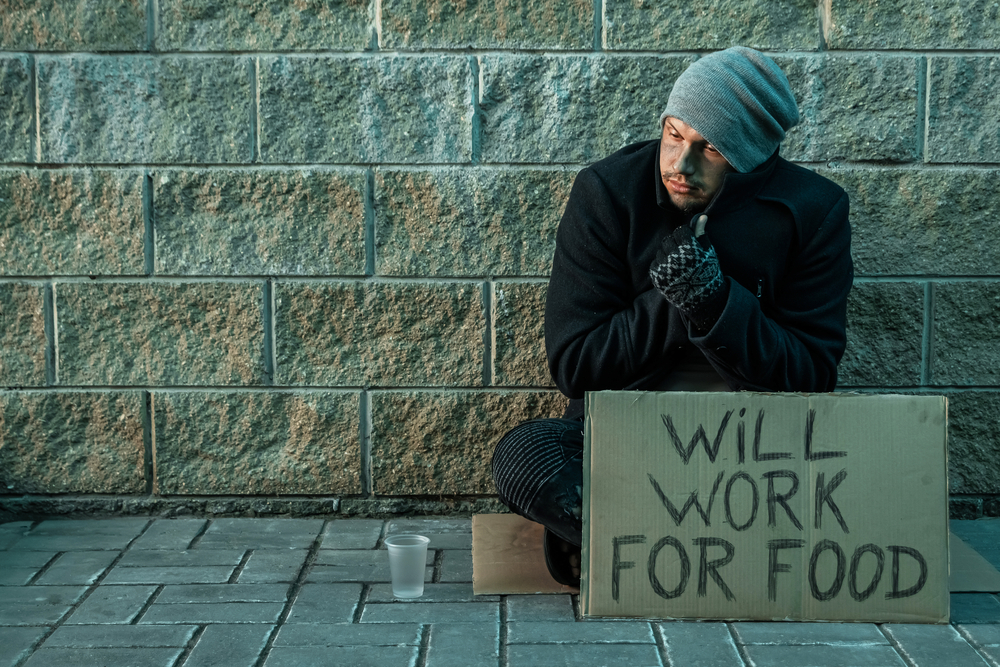
Rep. Maxwell Frost, a Democrat from Florida's 10th district, stood at a Washington press conference on September 2nd and said the following words out loud, on purpose, into a microphone: "You should not be forced to work in exchange for a bed."
He then introduced the No Homeless Detention Centers Act to make sure that stays the law of the land.
The bill — co-sponsored by Reps. Suzanne Bonamici of Oregon, Troy Carter of Louisiana, Pramila Jayapal of Washington, and Delia Ramirez of Illinois — would prevent any federal housing dollars from going to facilities that require homeless individuals to work as a condition for shelter. It would also ban "punishments" for what the bill calls basic survival activities: sleeping, resting, eating, drinking, or "protecting yourself from the elements."
Frost framed the whole thing in terms that would make a sociology professor weep with pride. "People need housing, not cages," he said. "They need support, not forced labor." He described a "growing effort in this country to treat homelessness like a crime instead of what it is — a housing crisis."
Forced labor. Cages. He's talking about shelters that ask you to sweep a floor or show up for a job training program.
The bill has the backing of more than 50 organizations, including the National Homelessness Law Center, the Southern Poverty Law Center, the National Coalition for the Homeless, and the Drug Policy Alliance. Eric Tars of the National Homelessness Law Center offered his own contribution to the discourse: "We know the solution to homelessness is housing, not handcuffs."
No one is proposing handcuffs. What some states and cities have proposed — and what Frost specifically objects to — are programs that tie shelter access to basic accountability measures. Show up sober. Participate in a work-readiness program. Accept a referral to a job. These are the "detention centers" and "forced labor" that five members of Congress are spending legislative time trying to ban.
Frost pointed to Florida's 2024 law prohibiting public sleeping as an example of the criminalization trend. That law, signed by Gov. Ron DeSantis, required local governments to designate areas for encampments rather than allowing tent cities to spring up on sidewalks, in parks, and under overpasses. Frost's position is that even that modest structure goes too far.
"You should not be punished for sleeping, resting, eating, drinking, or protecting yourself from the elements," Frost said.
Here's what Frost conspicuously did not say: what his alternative looks like. The bill conditions federal dollars on not requiring work. It doesn't create a single unit of housing. It doesn't fund a single treatment bed. It doesn't address the addiction and mental illness that account for the vast majority of chronic homelessness. It just makes sure that the people who are homeless never have to do anything in exchange for the help they receive.
Every working American trades labor for shelter. That's called rent. The entire economy runs on the principle that you contribute something in exchange for the resources you consume. Frost isn't proposing an exception to that rule — he's proposing that the exception become the rule, funded by the people still following the original one.
Rep. Troy Carter, one of the co-sponsors, added: "Homelessness is not a crime — it is a failure of systems meant to serve the needs of our communities." Which is a fine bumper sticker, right up until you ask which systems failed, who ran them, how much they cost, and whether anyone was ever held accountable for the results.
The cities with the worst homelessness in America — Los Angeles, San Francisco, Portland, Seattle, New York — have spent billions on exactly the kind of no-strings-attached programs Frost wants to mandate nationally. Los Angeles alone approved $1.2 billion for homeless housing and saw encampments grow. San Francisco spends over $100,000 per homeless person per year.
The results speak for themselves. Frost's bill says do more of it.