
Greg Abbott lost Texas by seven points. Three-term Republican governor of the second-largest state in the country, endorsed by the most popular Republican president in a generation, and state Rep. Gina Hinojosa beat him 52.9% to 45.6%. In Texas.
That wasn't even the worst of it.
Five Republican-held governor seats flipped to Democrats on Tuesday night, swinging the national map from a 26-24 Republican advantage to a 28-20 Democratic majority. That's the first time Democrats have held a majority of governor mansions since 2010 — a 16-year drought that ended in a single evening. Alaska and Kansas remain undecided, which means the final margin could get worse.
The states that fell read like a Republican obituary. Texas. Georgia. Ohio. Iowa. Nevada. These aren't purple swing states where losses can be explained away by demographic shifts or turnout models. Iowa elected Rob Sands after Kim Reynolds didn't seek reelection. Georgia went to Keisha Lance Bottoms after Brian Kemp was term-limited. Ohio — which hasn't elected a Democratic governor since 2006 — handed the mansion to Amy Acton, the physician who became a household name as the state's COVID-era health director. She beat Vivek Ramaswamy, Trump's own endorsed candidate, the biotech billionaire who ran for president two years ago.
In Nevada, incumbent Republican Governor Joe Lombardo lost to state Attorney General Aaron Ford.
Five states. Five losses. Not one of them close enough to blame on a recount.
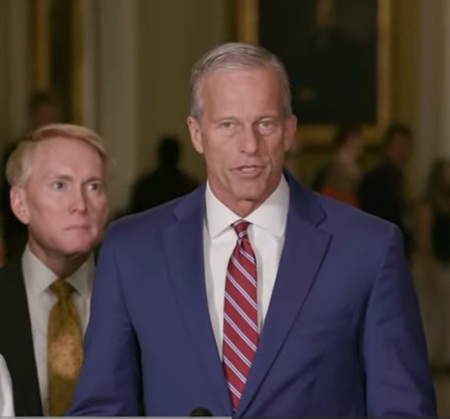
So naturally, Senate Majority Leader John Thune took to X to issue a statement. As reported by Breitbart, Thune vowed that "Senate Republicans will not stand idly by as the far-left, socialist wing" tries to unwind Republican accomplishments. He touted two years of achievements — the fastest Cabinet confirmations in two decades, judicial appointments at a pace not seen since the Reagan administration, border security wins, blocking what he called the largest tax hike in American history.
All of which is true. And all of which voters in five major states apparently found insufficient.
The Thune statement is a familiar document in Republican politics. It contains the word "fight." It references accomplishments. It warns the other side not to get too comfortable. It was posted on social media. It changed nothing. Conservative journalist Jack Posobiec responded with four words: "It's time for you to step down." Sean Davis, CEO and co-founder of The Federalist, was more direct: "Resign, you pathetic failure."
The frustration isn't hard to understand. Republicans still hold the White House. President Trump's veto pen means Democrats can't legislate their way to reversing the policy wins Thune listed. That part of the firewall holds. But governor seats aren't symbolic. They control state-level redistricting. They sign or veto election laws. They appoint officials who run the machinery of voting in 2028. Losing five of them in a single cycle doesn't just sting — it reshapes the battlefield for the next presidential race.
The party's defense will be that midterms are historically bad for the president's party. That's accurate. It's also the kind of thing you say when you don't have a better answer. Midterm losses are a pattern, not a law of nature. They happen when the party in power fails to give its voters a reason to show up. Pointing to the pattern doesn't explain why Iowa — Iowa — just elected a Democrat.
What nobody in Republican leadership has addressed is the gap between the Washington accomplishments and the state-level collapse. Thune's statement listed federal wins. Voters in Texas, Georgia, Ohio, Iowa, and Nevada weighed those wins against whatever they were seeing at home and chose the other option. The federal record was on the ballot. It lost five governor races in one night.
The Democratic governor majority now stands at 28-20, with two states still counting. The last time they held this kind of advantage, Barack Obama was preparing for his first inauguration. Republicans spent 16 years building a governor firewall that was supposed to protect the party's structural power at the state level.
It took one Tuesday to tear it down.