
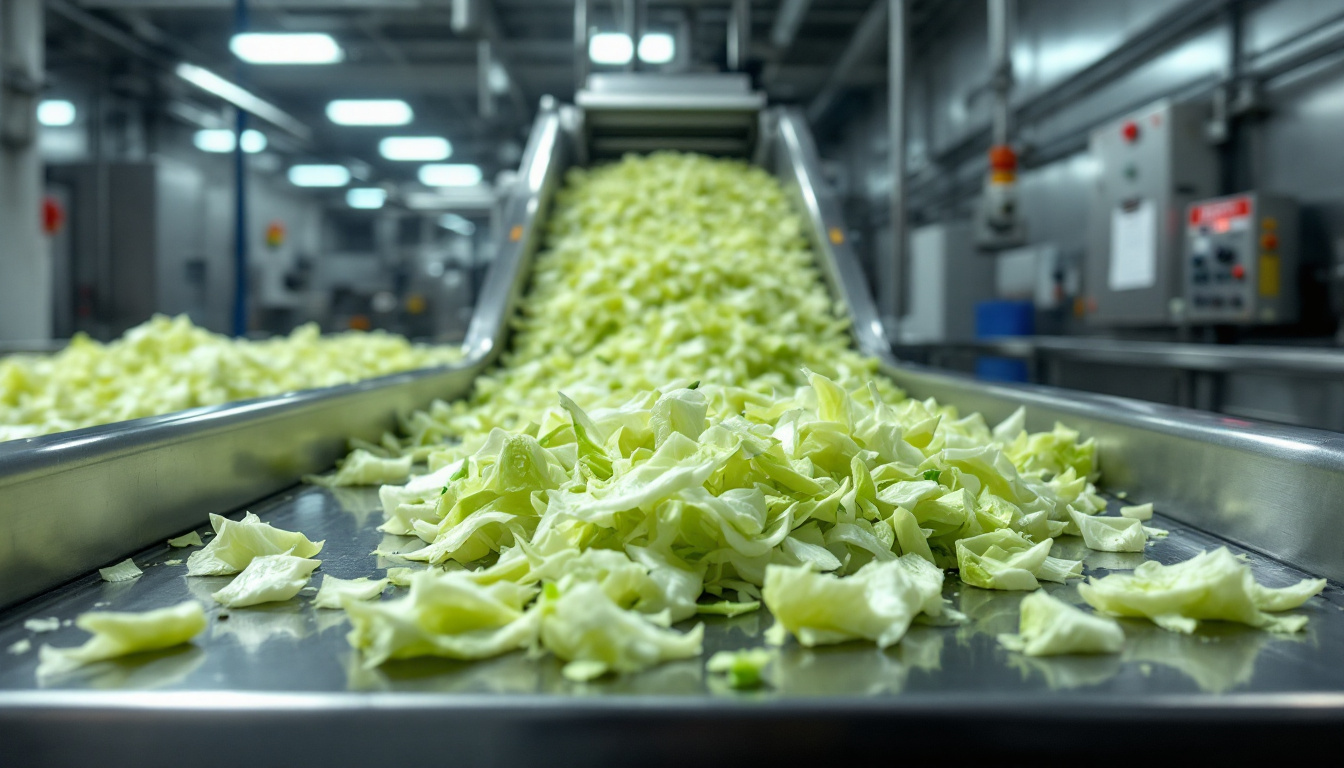
Michigan alone has logged 8,176 cases. Ohio has another 2,500. Across 41 states, roughly 12,000 Americans have been hit with a microscopic intestinal parasite called Cyclospora cayetanensis — a bug carried in human feces that hitched a ride into the country on shredded iceberg lettuce from central Mexico.
The normal annual caseload for the entire United States is about 3,000. We're at four times that and it's only July.
The CDC and FDA traced the outbreak to Taylor Fresh Foods — specifically its subsidiary Taylor Farms de Mexico — which supplied shredded iceberg lettuce to Taco Bell locations across the Midwest and to Walmart stores under the Marketside brand. The recall went out on July 17, covering 35 products with best-by dates ranging from July 18 through August 3, distributed to at least 27 states. By the time the recall hit, thousands of people were already sick.
Of the roughly 12,000 cases, 4,173 are confirmed and another 7,400 are still under investigation. Three hundred and eight people have been hospitalized. Zero deaths so far, which is genuinely good news, but "explosive diarrhea" that can persist for weeks isn't exactly a minor inconvenience.
The nine-state cluster at the center of the outbreak — Michigan, Ohio, Indiana, Illinois, Kentucky, West Virginia, Pennsylvania, Kansas, and Oklahoma — accounts for the worst of it. But the contaminated lettuce was shipped to restaurants and retailers in 27 states, which means this thing had a head start most food recalls don't get.
Gwen Biggerstaff, deputy director of the CDC's Division of Foodborne, Waterborne and Environmental Diseases, offered this reassurance: "We anticipate continuing to see cases increase, possibly through the end of August."
Comforting.
The parasite itself is nasty but treatable. Cyclospora cayetanensis infects the small intestine and takes up to 14 days to produce symptoms — meaning people can be carrying and spreading contaminated food for two weeks before anyone knows there's a problem. The bug needs one to two weeks outside the human body before it becomes infectious again, so direct person-to-person transmission is unlikely. Cooking food to 158 degrees Fahrenheit kills it. But nobody's cooking their Taco Bell salad.
North Carolina, which has logged over 500 cases, is also investigating whether fresh parsley and cilantro are additional vehicles. That investigation is ongoing.
Kali Kniel, a professor of microbial food safety at the University of Delaware, and Donald Schaffner, a food microbiology professor at Rutgers, have both emphasized that the vast majority of fresh produce is safe and unconnected to this outbreak. That's true. It's also true that 12,000 people didn't get a vote on whether their lunch salad was in the safe majority.
The New York Post reported the outbreak expanding to four additional states on July 24, bringing the confirmed cluster to nine. The broader picture — 41 states with cases — suggests this is less a contained regional event and more a supply-chain problem that got loose before anyone caught it.
Here's what nobody in Washington seems eager to discuss: this lettuce came from Mexico. Taylor Farms de Mexico, central Mexico, shipped into the U.S. food supply and distributed coast to coast before a single test flagged it. The FDA actually announced on July 20 that one of its earlier positive test results was a false positive — which means even the testing regime wasn't clean.
We import enormous quantities of produce from Mexico. That's not new. What's new is 12,000 cases of a fecal parasite in two months, four times the usual annual rate, traced directly to a Mexican supplier.
Three thousand cases a year was the baseline. Twelve thousand in eight weeks is the new number. The CDC says it'll keep climbing through August. The recall covers lettuce with best-by dates that haven't even arrived yet.
That's not an outbreak. That's a supply chain that failed at every checkpoint between a field in central Mexico and a drive-through in Michigan.