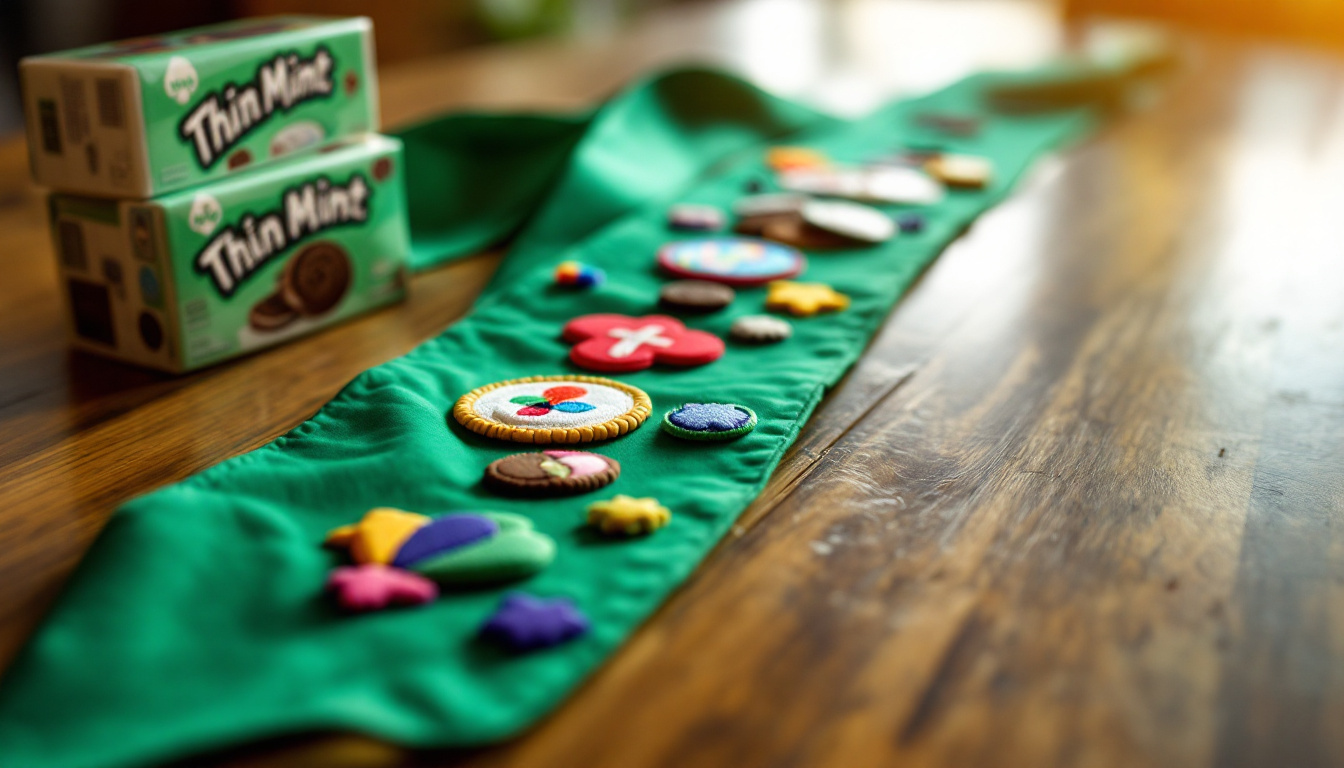
The Girl Scouts of America — the organization you associate with Thin Mints, camping trips, and teaching young girls self-reliance — is now offering badges for learning the Five Pillars of Islam. Shahada, Salah, Zakat, Sawm, and Hajj are apparently part of the modern scouting experience now, right alongside cookie sales and first aid.
No equivalent badge exists for Christianity.
The program is being framed as part of a broader "interfaith education" push, which is the kind of language that sounds reasonable until you notice it only goes in one direction. The Girl Scouts website lists the Islamic faith badges as part of their religious recognition program. Girls can earn them by studying Islamic teachings, practices, and the Five Pillars specifically.
The "interfaith" label is doing a lot of heavy lifting for a program that seems far more interested in one particular faith than others.
Try proposing a badge where Girl Scouts memorize the Ten Commandments or study the Gospels. The same institutional voices currently applauding "interfaith exploration" would be filing complaints before the patch hit the sash. We all know this. The pattern is so predictable it barely qualifies as observation anymore — it's just calendar management.
The Girl Scouts of America have roughly 2.5 million members across the country. These are elementary and middle school girls whose parents signed them up for an organization built on community service, outdoor skills, and personal development. The religious recognition program has existed for years, but the Islam-specific badges represent a shift in emphasis that parents in a majority-Christian country might reasonably expect to hear about before their daughters come home reciting the Shahada.
And that's the part that makes the "interfaith" framing collapse under its own weight. Interfaith implies balance. It implies reciprocity. It implies that if you're going to teach the Pillars of Islam, you're also going to teach the sacraments, or the Four Noble Truths, or the Shema. But that's not what's happening. What's happening is one faith gets the institutional spotlight, and the rest get a polite nod in the "other resources" section.
Parents who raise concerns will be told they're intolerant. That's the playbook. Wrap a one-directional cultural project in the language of inclusion, then call anyone who notices the direction a bigot. It works until enough people point out that "inclusion" used to mean everybody.
The Girl Scouts of America started in 1912. Juliette Gordon Low founded it in Savannah, Georgia. For over a century, the organization taught girls to be resourceful, independent, and grounded in their communities. Those communities were overwhelmingly Christian — not because anyone excluded other faiths, but because that was the country.
Now the organization has decided the country needs correcting.
An organization that won't create a Christianity badge telling parents their daughters should learn the Five Pillars of Islam isn't practicing interfaith education. It's practicing a preference — and hoping nobody's rude enough to say so out loud.