
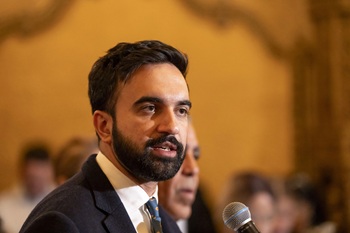
Radhames Rodriguez has run a bodega in East Harlem for years. There are five bodegas within a few blocks of his store. Soon, if New York City Mayor Zohran Mamdani gets his way, there will also be a taxpayer-funded government supermarket selling the same products at 30% below what Rodriguez can charge.
"Having items that sell for 30% less than our prices, means nobody will go to our stores," Rodriguez, president of the United Bodegas of America, told reporters.
He's not taking it quietly. The Multicultural Business Coalition — a nonprofit formed earlier this year specifically in response to Mamdani's government grocery scheme — just voted to file a lawsuit against the city. The MBC represents 50 chambers of commerce spanning Asian, African, Caribbean, Hispanic, Middle Eastern, and Jewish-owned businesses across New York. These aren't hedge fund managers. These are immigrant families who built something from nothing, and they're watching the city's first socialist mayor try to undercut them with their own tax dollars.
Mamdani's plan calls for five taxpayer-funded supermarkets — one in each borough — selling produce, meat, milk, cheese, and bread at a 30% discount. The price tag for taxpayers: $70 million. The stores would compete directly with the corner bodegas and small groceries that are the economic backbone of immigrant neighborhoods across the city.
Frank Garcia, chairman of the MBC, says the mayor won't even take a meeting. "The mayor doesn't seem to want to sit down with us," Garcia said. He added that Mamdani "won't be able to bully these lawyers we are going to bring in."
The irony here is so structurally perfect it almost looks engineered. Mamdani is a self-described democratic socialist who rode into office on a platform of fighting for immigrants and working-class New Yorkers. He currently leads his next-closest opponent by 19 points in a Siena College poll. And the people organizing against him aren't Republican donors or conservative PACs — they're the immigrant small business owners his entire political identity is supposedly built around protecting.
Progressives who back government-run grocery stores love to frame opposition as corporate greed. Except the opposition here is a Caribbean bodega owner in the Bronx and a Middle Eastern grocer in Queens, people who work sixteen-hour days and don't have lobbyists. When your "help the little guy" policy requires crushing the actual little guys, maybe the policy is the problem.
Chicago tried something adjacent — the city blew $14 million trying to keep grocery stores open in underserved neighborhoods, and those stores shut down anyway. Government doesn't run grocery stores well because government doesn't run anything well. But Mamdani wants to spend five times what Chicago wasted and somehow expects a different result.