
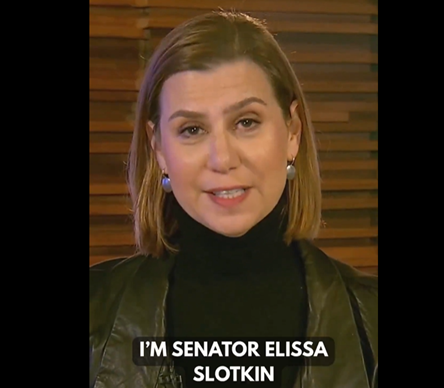
Sen. Elissa Slotkin of Michigan stood at the University of Chicago Institute of Politics and explained, on camera, what she wants to do to young Americans who take entry-level jobs in the Trump administration. Not behind closed doors. Not in a leaked fundraiser recording. At David Axelrod's own forum, into a microphone, with the confidence of someone who thinks the audience agrees.
"I want them to be like, Lord, that might be buying myself a ton of problems that I don't want, and so let me avoid participating in that," Slotkin said. "I want that deterrence message."
Deterrence. The word a senator chose to describe her posture toward recent college graduates considering public service.
Slotkin wants young people coming out of school to look at government work under this administration and calculate that the personal cost is too high. "Should I go work for the Trump administration? Like that sounds fun. I might get an opportunity," she said, narrating the internal monologue she wants to destroy.
The goal isn't accountability after the fact. The goal is to scare them before they ever walk through the door.
This isn't the first time Slotkin has made the threat explicit. On September 30, speaking at the Carnegie Endowment for International Peace, she floated "20-year sentences" for administration officials — naming Kristi Noem, Doug Burgum, and Jeanine Pirro specifically. Cabinet secretaries. A former judge. People confirmed by the United States Senate to serve in their roles.
Sen. Mike Lee responded on October 17: "It is absolutely disgraceful to threaten young Americans for participating in politics and serving their country."
As commentator Hans Mahncke put it: "Anyone who still doubts that lawfare will only get worse needs to listen to Elissa Slotkin."
The framing from Slotkin's side is always "accountability." The word does real work in Washington — it sounds responsible, civic-minded, bipartisan. But accountability requires an offense. What's the offense here? Accepting an appointment? Filing paperwork at a federal agency? Slotkin never specifies the crime because specifying it would reveal the game. The crime is proximity. The crime is serving under the wrong president.
This is the same party that spent four years telling us democracy was under threat. The same political movement that said norms matter, institutions matter, peaceful transfer of power matters. And here is one of their senators — not a backbencher, not a freshman nobody, but a senator from a swing state who won her seat by marketing herself as a moderate — publicly announcing that working for a duly elected administration should come with legal consequences.
Slotkin didn't whisper this to donors at a private retreat. She said it at one of the most prominent political forums in the country and expected applause. That's not a gaffe. That's a platform.
The deterrence she's describing has a simpler name. When you threaten people with legal consequences for lawful political activity to prevent them from participating, that's intimidation. Dress it up in policy language, deliver it from a lectern at the University of Chicago, cite accountability and norms and the rule of law — the mechanism is identical.
Twenty-year sentences for cabinet officials. Legal problems for twenty-two-year-olds. A deterrence message aimed at anyone who might consider serving.
She said it out loud because she thought it would play well.