
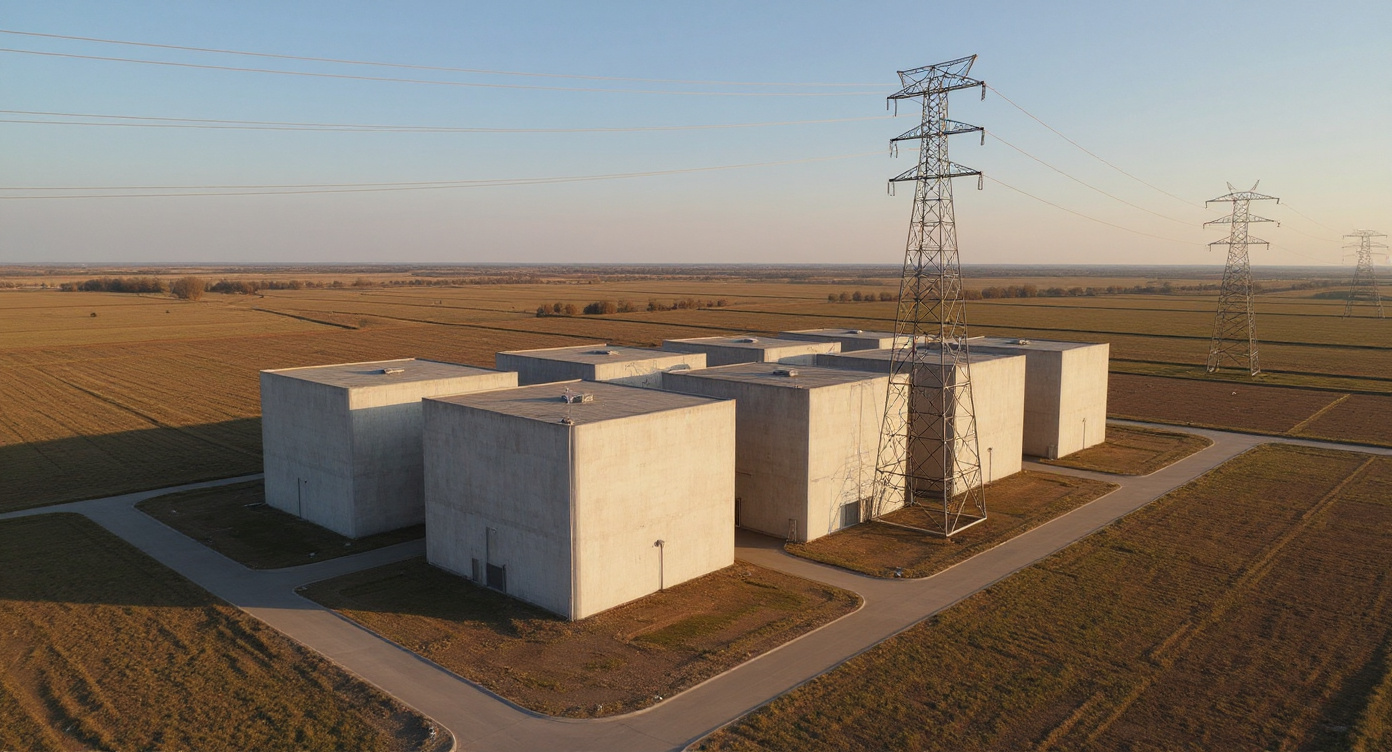
Meta's new data center in El Paso, Texas is a $10 billion facility sprawling across 1,000 acres with 1 gigawatt of computing capacity. For context, a gigawatt is roughly enough electricity to power 750,000 homes. One building. One company. One city's worth of power.
And there are 1,500 more proposed across the country.
The AI data center buildout has quietly become one of the most interesting political flashpoints heading into the 2026 midterms, and it's doing something almost nothing else can do in American politics right now — uniting voters across party lines. A Gallup poll found 7 out of 10 Americans oppose building data centers in their areas. A separate Reuters/Ipsos poll from June 2026 put the number at 59% opposed to a data center within 10 miles of their homes. That's not a partisan split. That's a consensus.
President Trump is not backing down from the buildout. At an event in July, he told communities directly: "You have to convince your community how great these things — you can't fight it, you have to go with it." He added that communities and states would "become rich" from the investment, with "very little disruption." And the kicker: "If you don't take all that money, somebody else is going to take it."
That's Trump at his most transactional, and honestly, his most honest. The AI revolution is not a policy proposal someone can vote down. It's an economic tidal wave. The question isn't whether data centers get built. It's where, how many, and who benefits.
But candidates running in November are reading the same polls Trump is — they're just drawing different conclusions.
State Rep. James Talarico, a Democrat running for a Texas Senate seat, is going full populist on the issue. "We got to start reigning in these data center companies," Talarico said. "We got to stop them from jacking up those utility bills. We got to stop them from showing up in our communities without any input from residents, and we got to stop them from using all our water because we're in a water crisis in this state."
Notice the framing. It's not "ban AI." It's "protect your utility bill and your water." That's a message that works in any district in America, red or blue. And Talarico knows it.
On the Republican side, Rep. Byron Donalds, running for governor of Florida, took a more measured approach on Bloomberg Podcasts in July. He acknowledged the water concerns but pointed out that data centers "recycle and clean that water and keep it self-contained on their property." His bigger push was on proximity: "I don't want to see a data center outside of my front door. I know Floridians don't want to see one outside of their front door, so making sure that they're away from residential areas just makes common sense."
Donalds is threading a needle — pro-growth, pro-technology, but don't put the thing in my neighborhood. That's the Republican sweet spot on this issue, and it's going to get a lot of airtime between now and November.
New York has already gone further than any other state, imposing a one-year statewide moratorium on new data center construction. The opposition has even gone international — the Philippines saw protests against proposed AI data centers from a group called Pax Silica.
The political math here is uncomfortable for both parties. Democrats want to ride the populist wave against Big Tech, but their donor base includes the very companies building these facilities. Republicans want to champion economic growth and American AI dominance, but their voters are the ones watching utility bills climb and farmland disappear under concrete.
Trump's "you can't fight it" line is the rare political statement that's simultaneously terrible messaging and completely accurate. You can't fight it. The $600 billion AI buildout is happening whether voters in swing districts like it or not. The only variable is whether the communities hosting these facilities get something out of the deal — jobs, infrastructure, tax revenue — or just the electric bill.
Seventy percent opposition and 1,500 proposed facilities. One of those numbers is going to move. The smart money says it won't be the one with dollar signs behind it.