
Marc Klaas sat in the Justice Department's Great Hall on Monday, thirty years after a jury sentenced Richard Allen Davis to death for murdering his daughter Polly. The sentence was supposed to mean something. Two days after the midterms, California Governor Gavin Newsom erased it — along with 547 others.
Klaas called it a "knife in the back."
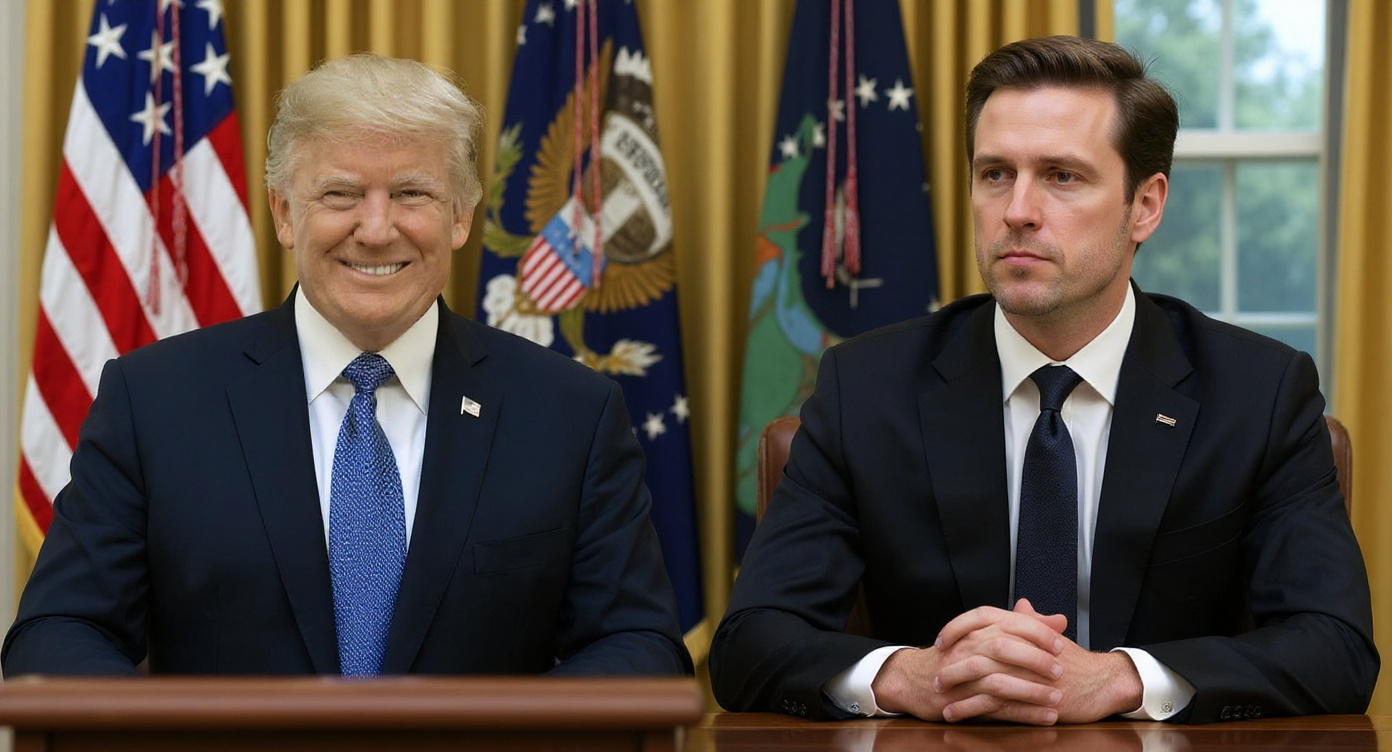
President Trump brought Klaas and dozens of other victims' families to the Justice Department to stand beside them as he announced a new presidential directive ordering the DOJ to seek the death penalty for child murderers, rapists, and human traffickers who kill their victims. He called Newsom's mass commutation "one of the most shocking acts of injustice our country has ever seen" and told the families their lives would "never, ever be the same" — but that the federal government wouldn't forget what was taken from them.
Newsom's order covered all 548 inmates on California's death row. Of those, 382 cases still require California Supreme Court approval before the commutations take effect. The families aren't waiting — on November 17th, they petitioned a court to block the commutations entirely.
The White House released a list of 20 of the most notorious killers Newsom's order protects. Bob Williams, convicted of rape and murder in Bakersfield in 1994. Marcus Wesson, who killed nine of his own family members in Fresno in 2004. Randy Kraft, a serial killer convicted of 16 murders. Charles Ng, convicted of 11 murders — including two infants.
Kern County District Attorney Cynthia Zimmer said Newsom "didn't know the names of the defendants or even the names of the victims." He commuted 548 sentences without learning who he was sparing or who they destroyed.
California voters rejected abolishing the death penalty twice — in 2012 and again in 2016. Newsom imposed a moratorium on executions in 2019 anyway. The state hasn't executed anyone since 2006. So the commutations weren't about saving anyone from imminent execution. They were about making sure no future governor could reverse his moratorium and carry out the sentences voters wanted enforced.
Newsom's office frames this as compassion. The White House responded that he "must stop playing politics with public safety." That's generous. This wasn't politics. Politics involves constituents. Newsom's constituents voted — twice — to keep the death penalty. He overrode them to protect killers on his way out the door.
Trump, meanwhile, is moving in the opposite direction with federal resources. His January 2025 Inauguration Day executive order directed the Attorney General to pursue the death penalty in qualifying federal cases. Since that order, the DOJ under Attorney General Todd Blanche has sought the death penalty 49 times and authorized 44 federal defendants for capital prosecution. Under the previous administration, that number was one.
Rep. Brandon Gill, Republican from Texas, has introduced the "Just Punishment for Murder Act" — H.R. 11132 — to give federal prosecutors additional tools for capital cases. The bill text hasn't been published yet, but Gill introduced it in the 119th Congress as a direct legislative response to what Newsom did.
Trump closed the event with five words: "Capital punishment will be swift and certain."
Five hundred forty-eight killers got new sentences last week. Zero of their victims' families were consulted.