
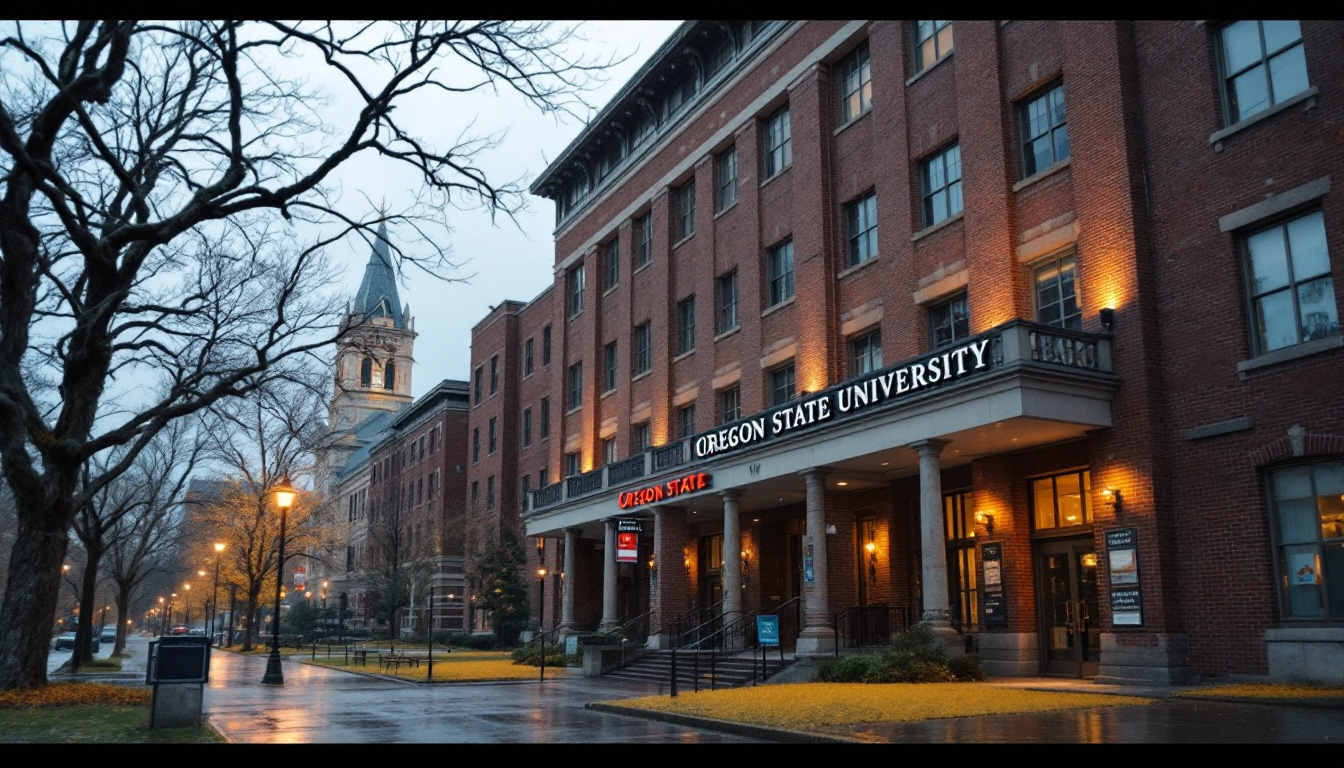
The jokes lasted about twenty minutes. A group of students at Oregon State University, in a conversation among themselves, made cracks about neopronouns. Nobody was targeted. Nobody filed a complaint at the time. A housing staffer initially approached them about noise during quiet hours — a routine dorm interaction that should have ended with "keep it down."
It didn't end there. A student who overheard the conversation requested the incident be documented through the university's bias reporting process.
Oregon State's Office of Equal Opportunity and Access runs a bias response team — one of those campus mechanisms that exists to process exactly this kind of report: students laughing about the wrong things within earshot of the wrong people. The College Fix obtained the bias reports through a formal records request covering August through September 2025, and when Oregon State initially charged $400,000 in fees for the records, the outlet had to appeal to the Benton County District Attorney's office to get them released.
Four hundred thousand dollars to keep jokes about neopronouns under wraps. That price tag alone tells you how comfortable the university was with public scrutiny of its reporting pipeline.
Daniel Schmid, an attorney with Liberty Counsel, laid out the constitutional problem plainly: "There are significant First Amendment concerns with all of the 'bias-incident reporting systems.'" He pointed out that "neither formal punishment nor the formal power to impose it is strictly necessary" for these systems to chill speech. The machinery doesn't need to expel you or fine you. It just needs to exist.
"The fact that the policies even exist and provide for a reporting mechanism" is enough to suppress speech, Schmid explained. Students know the system is there. They know someone can file a report. The calculus changes — not because the punishment is severe, but because the process itself is the punishment. Your name goes in a file. Someone from an administrative office reaches out. You explain yourself.
Federal courts have noticed. Eleventh Circuit Judge Kevin Newsom and panels in Speech First, Inc. v. Cartwright in 2022, Speech First, Inc. v. Schlissel in 2019, and Speech First, Inc. v. Fenves in 2020 have all scrutinized bias response systems for exactly this chilling effect.
The College Fix contacted Oregon State University on November 5, 2026, for comment. The university's response — or lack of one — doesn't change the architecture of the system. A staffer heard students joking, a report was filed, an office processed it, and a file now exists somewhere in the administration's records tying those students to a bias incident. For jokes.
Schmid said there's "really only one constitutional answer" to whether these systems survive First Amendment scrutiny. The courts are working their way toward the same conclusion. Oregon State charged $400,000 to delay it.