
Saudi Aramco lowered the price of Arab Light crude by $11 a barrel — to $1.50 below the regional benchmark — marking the largest monthly reduction in official selling prices since at least 2000. For about 48 hours, oil traders were pricing in something that felt almost unfamiliar: a normal market.
Then Iran attacked a Qatari liquefied natural gas tanker in the Strait of Hormuz, and the whole thing went sideways.
The sequence matters. Brent crude had slumped to around $72 a barrel by early July, roughly where it sat at the end of February — before the U.S. and Israel launched their campaign against Iran. West Texas Intermediate settled below $69. The ceasefire was holding, shipping was resuming through the Strait, and OPEC+ members led by Saudi Arabia and Russia agreed over the weekend to add 188,000 barrels a day to production quotas. Gas prices were headed in a direction Americans actually wanted them to go.
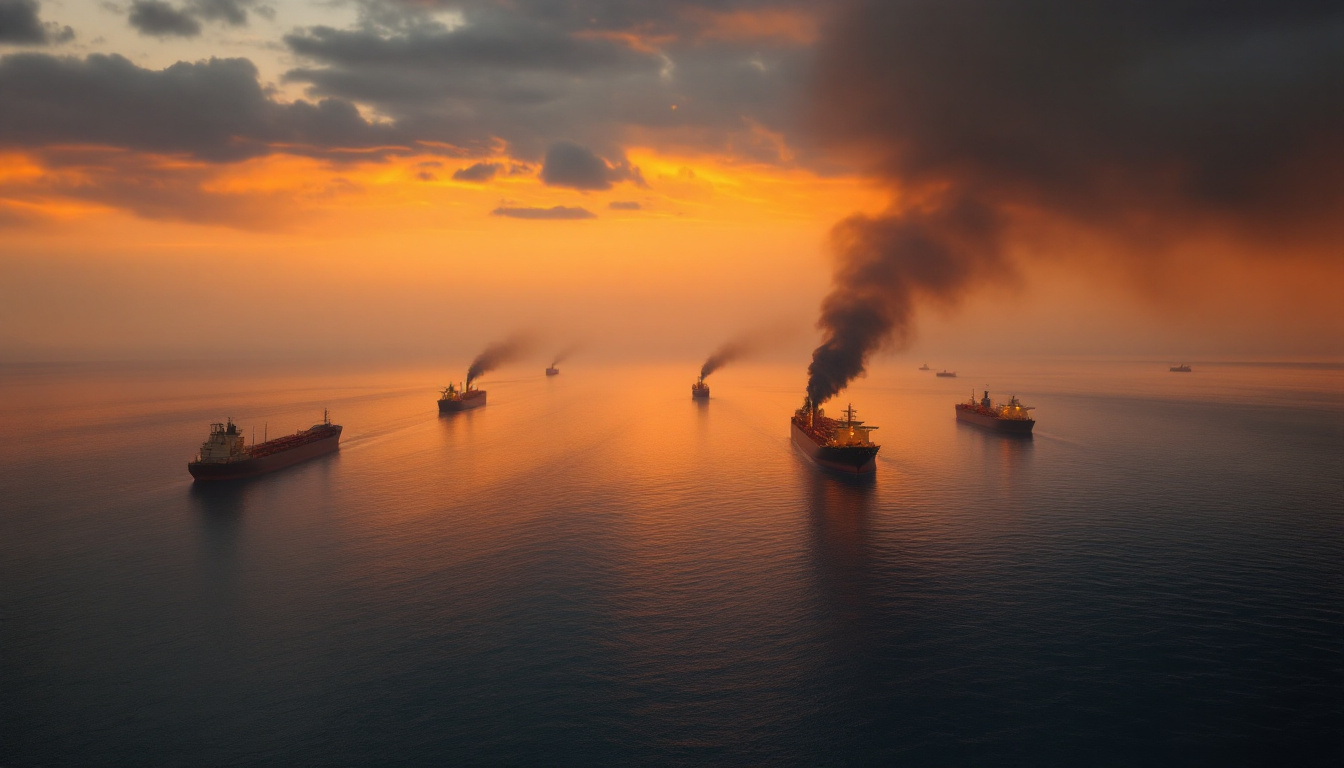
That lasted until Tuesday morning. Iran struck the Al-Rekayyat, a Qatari LNG tanker, while it transited near the Strait of Hormuz. A second tanker was hit by an unidentified projectile and reportedly suffered structural damage. By the close, Brent crude futures had settled 3% higher at $74.16. After hours, when the U.S. revoked Iran's license to sell its oil, Brent popped 5.6% to $76.04. WTI jumped to $72.25.
So in one trading session, every dollar Saudi Arabia shaved off crude prices got swallowed by a single missile and whatever hit that second tanker.
The backdrop here is the Islamabad Memorandum, signed June 17 by the U.S. and Iran, which formalized a 60-day window to negotiate a permanent end to the war. The deal was supposed to restore traffic through the Strait of Hormuz — the chokepoint that handles roughly 20% of the world's oil and liquefied natural gas. Both sides agreed to cease military operations, lift their respective blockades, and set up communication lines to keep the waterway open.
The agreement also included Iran reaffirming a commitment not to develop a nuclear weapon, with follow-up talks to address Iran's stockpile of highly enriched uranium and its enrichment capabilities. The framework even included a new regime for managing the Strait jointly with Oman, under which Iran would "charge fees for services" — which is a polite way of saying toll booth.
The administration's position is that the deal is working — that the ceasefire held for three weeks, shipping resumed, and the diplomatic process is on track. They'll point to the 60-day timeline and argue that isolated incidents don't invalidate the framework.
The problem with that argument is currently floating in the Strait of Hormuz with structural damage. Two tankers attacked on the same day the market was finally pricing in stability doesn't look like an "isolated incident." It looks like a pattern — specifically, the same pattern Iran has run for decades: agree to terms, pocket the concessions, then test how much violence the other side will tolerate before calling the deal off.
The U.S. revoking Iran's oil sale license after hours suggests the administration knows it too. You don't pull someone's permission to sell crude on the global market because of a misunderstanding.
Saudi Arabia's record price cut was a genuine market event — the kingdom flooding the zone to compete for buyers in a world suddenly awash in supply. That's how markets are supposed to work. More supply, lower prices, American consumers win. OPEC+ boosting output by 188,000 barrels a day was another signal that the cartel saw a path toward normalcy.
But normalcy requires a Strait of Hormuz that ships can transit without catching projectiles. Twenty percent of the world's oil flows through a waterway that Iran treats like its personal leverage device. The ceasefire gave us three weeks of lower prices. Iran gave us a reminder of who controls the chokepoint.
The price of oil on any given Tuesday is a rounding error. The price of pretending Iran will honor an agreement is something else entirely.