
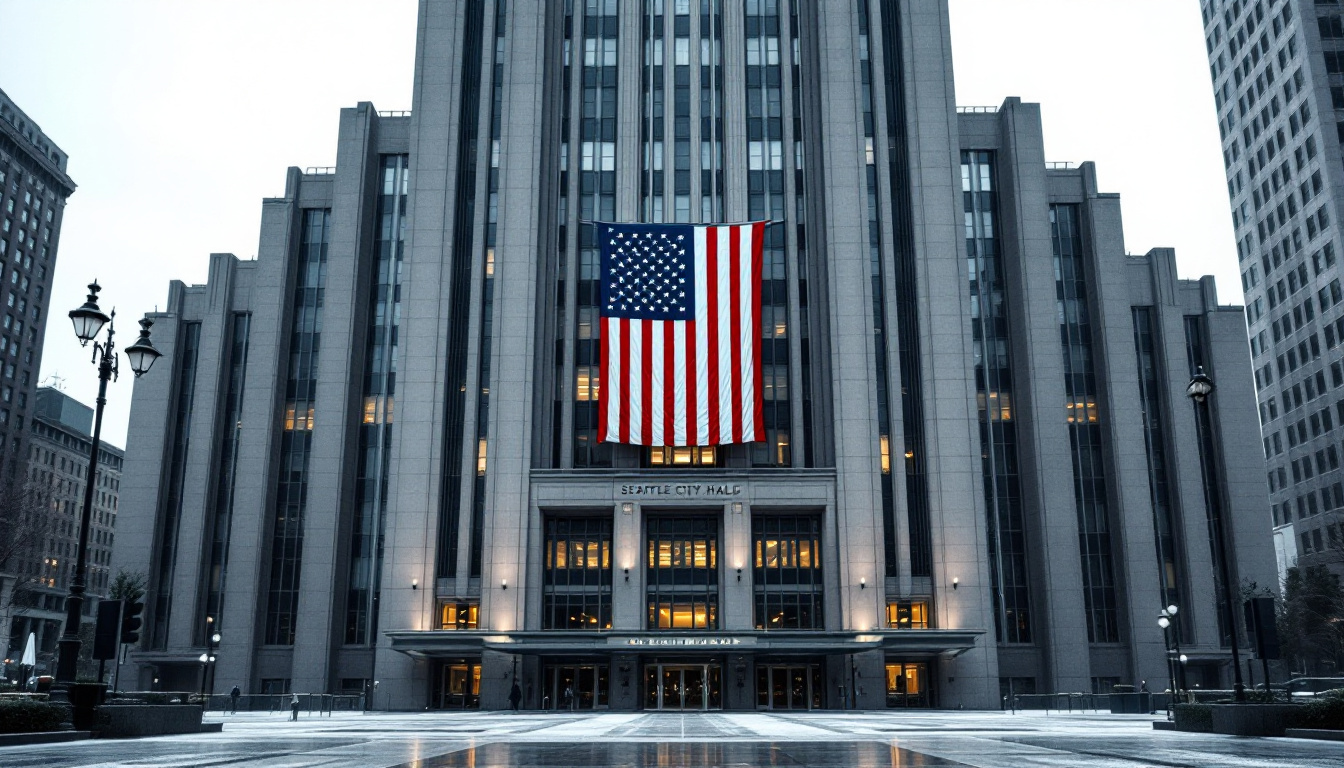
On November 10, the Seattle Public Schools Board voted to authorize legal action against Initiative 638 — the measure Washington voters had approved just five days earlier by a margin of more than 10 percentage points across 35 of 39 counties. Two days after that, Seattle Mayor Katie Wilson threw her support behind the challenge.
The ballots hadn't even been certified yet.
I-638 requires female athletes to provide documentation from a health care provider verifying female sex based on reproductive anatomy, genetic makeup, or normal endogenously produced testosterone levels. It passed not just statewide but in deep-blue Pierce County and Clark County by 60-40 margins. The only county where it failed to clear a majority was King County — Seattle's backyard. So naturally, that's where the resistance is headquartered.
Mayor Wilson, a self-described "sewer socialist," framed her opposition around protecting students. She cited the city's "commitment to creating inclusive learning environments where every student has the opportunity to reach their full potential" and raised concerns about "the measure's impact on student privacy, safety, dignity, and equitable access to educational opportunities."
Student privacy. That's the argument. The same measure that asks a doctor to check a box on a form is being recast as an intrusive surveillance regime.
Let's Go Washington, the group that sponsored I-638, had a simpler read on what's happening. Executive Director Darren Littell said Wilson and her allies "want boys in girls' sports at all costs, and they are willing to undermine democracy to get them there." He added: "Girls' leagues should never have become the all-purpose leagues that these organizations want them to be."
The city's legal theory frames the initiative as imposing an "intrusive sex-verification regime" that creates financial and logistical burdens on female athletes — the very athletes the measure was written to protect. Seattle's lawyers argue the undefined terms will cause inconsistent administration and that families will face burdens scheduling medical appointments and potential blood or genetic tests mid-season. As the Let's Go Washington spokesperson put it: "If asking a doctor to check an additional box requires legislative oversight, new funding structures and layers of bureaucracy, maybe Olympia needs some streamlining."
George Washington University law professor Jonathan Turley suggested the legal strategy might backfire spectacularly. He warned that Seattle could "burn millions on a quixotic challenge that could establish even more negative precedent for blue states." He noted that Supreme Court Justice Brett Kavanaugh has already signaled that transgender participation cases "do not require an overhaul of women's and girls' sports" — language that doesn't exactly favor Seattle's position.
The voters who passed I-638 weren't operating in a vacuum. They'd watched what happened in their own state. In December 2025, a female wrestler named Kallie Keeler from the Puyallup School District was allegedly sexually assaulted on the mat by a secretly male competitor. She later filed an emergency Supreme Court petition seeking advance notice if she'd be paired with a male wrestler. At Camas High School, a male runner named Logan Mihailoff switched to the girls' cross-country team mid-season, prompting female athletes from multiple schools to forfeit a race in what became known as the "Camas Courage" protest.
Those are the incidents the voters were thinking about when they went to the polls. Wilson is thinking about something else entirely.
Washington's Democratic Attorney General Nick Brown hasn't announced whether the state will join the challenge, but Seattle isn't waiting. The certification date for I-638 is December 3. The legal machinery is already moving.
Four years of "democracy is on the ballot." Thirty-five of 39 counties said yes. The mayor said no.
Certification is in three weeks.