
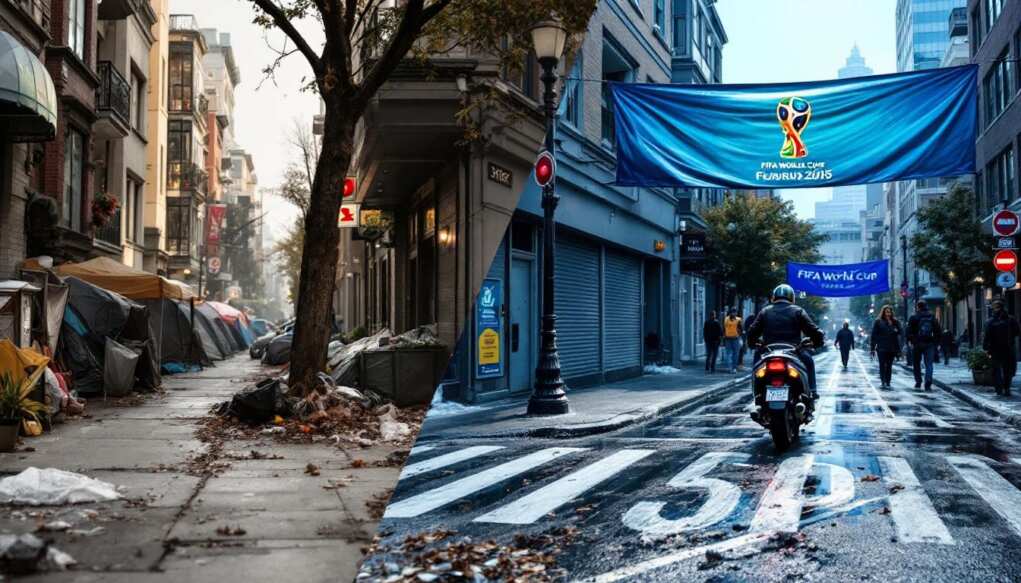
Seattle — the city that has spent the last decade telling its own taxpayers to step over needles, dodge tent cities, and accept open-air drug markets as the price of “compassion” — has suddenly discovered the magical ability to clean itself up. Not for you, of course. For soccer fans. The 2026 FIFA World Cup is bringing six matches to Lumen Field, and an estimated 750,000 international visitors are about to descend on the Emerald City. And wouldn’t you know it, the city that couldn’t be bothered to pick up a syringe for its own residents is now power-washing sidewalks like their lives depend on it.
So they COULD do it this whole time. They just didn’t think you were worth the effort. Unbelievable.
Let’s talk numbers, because the numbers are absolutely staggering. Seattle’s own Clean City program — the one they apparently only activate when foreigners are watching — collected 661,000 used needles, syringes, and lancets from city streets in a single year. Six hundred and sixty-one thousand sharp objects just lying on sidewalks where your kids walk to school. They hauled 5.3 million pounds of waste off the streets. They pulled nearly 470,000 pounds of garbage out of RV encampments alone. They did 102 “RV remediations,” which is government-speak for “we finally towed the biohazard on wheels that’s been parked in front of your house for eight months.”
And the city’s annual budget for all of this? Twenty million dollars. They had twenty million dollars a year to deal with the problem and the problem kept getting worse. You know why? Because there are no consequences. Zero. The city’s official policy on public drug use is essentially: “We see you, here are some clean supplies, have a nice day.” They distributed over 19,000 purple garbage bags to people living in encampments. Not apartments — garbage bags. That’s the solution. That’s what twenty million dollars buys you in progressive Seattle.
Charlie Harger over at KIRO Newsradio put it perfectly: “Last Thursday, the city cleared out the camps. By Monday, the tents were already coming back.” At Totem Pole Park — a park that features a traditional Korean pavilion donated by Seattle’s sister city — crews cleared the encampments on a Wednesday afternoon. By Thursday morning, the tents were back up. Wednesday to Thursday. They couldn’t even keep a park clean for twenty-four hours.
But now? Now FIFA is coming to town and suddenly Seattle looks like it’s auditioning for a tourism commercial. Streets are getting scrubbed. Camps are getting swept. Needles are getting picked up with an urgency that would make you think the mayor just found out the health inspector was on his way.
We’ve seen this movie before, by the way. Seattle pulled the exact same stunt for the MLB All-Star Game. Harger described what happened: “The streets got cleaned. It looked great. Then the teams left and, within a week, it was back to business as usual.” A Potemkin village. A stage set. Clean enough for the cameras, filthy again by the time the tourists fly home.
This is what progressive governance looks like in 2026, folks. Two tiers. One city for the people who live there and pay taxes — that city gets tent encampments in the parks, needles on the sidewalks, and a government that shrugs and hands out garbage bags. And another city — a clean, shiny, power-washed version — that only exists when important people from other countries show up and the city council doesn’t want to be embarrassed on international television.
Meanwhile, other cities figured this out years ago. San Francisco — San Francisco! — elected a mayor who ran on actually cleaning up the streets. Colorado gathered 200,000 signatures for a fentanyl crackdown ballot measure. Nashville, Houston, Denver — cities across the country looked at open-air drug scenes and said: “No. Not here. Not on our sidewalks.” Seattle looked at the same problem and said: “Here’s a purple garbage bag. Good luck.”
And now Washington state is staring down a $15 billion budget deficit. The governor mandated 6% cuts across every agency. But there’s always money to scrub the sidewalks when the world is watching. There’s always money to make Seattle look presentable when 414,000 fans are about to fill Lumen Field and the cameras are rolling. The money was there the whole time. The willingness was not — at least not for you.
That’s the part that should make every Seattle taxpayer furious. It’s not that the city can’t fix the problem. They just proved they can. They have the crews. They have the equipment. They have the budget. They’ve been choosing not to use it for the people who actually live there and fund the whole operation.
You paid your property taxes. You voted. You called your council member. You stepped over the needles on your way to work and drove past the tent cities on your way to drop your kids off at school. And the city’s response was: deal with it. That’s just what urban life looks like now. Stop complaining.
But some soccer fans from Europe are coming? Roll out the trucks. Fire up the power washers. Get those tents out of here before anyone with a foreign passport sees how we actually run this place.
Seattle residents deserve better than a government that treats them like second-class citizens in their own city. You shouldn’t have to wait for a World Cup to get a clean sidewalk. But hey — at least now you know the truth. They could have done this any time. They just didn’t think you were worth it.