
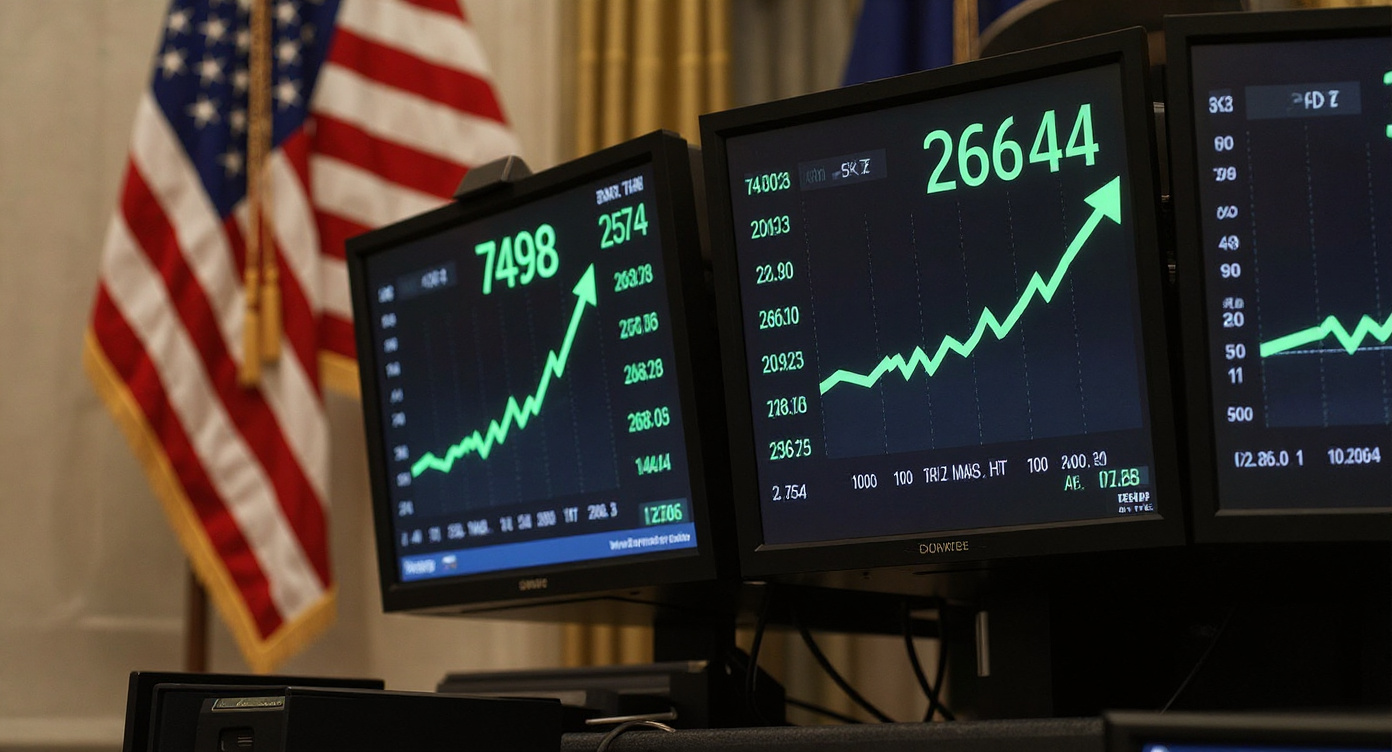
The S&P 500 closed Tuesday at 7,498.38. The Nasdaq finished at 26,194.76. Both indexes just posted their best quarterly performance since 2020, and the Dow Jones Industrial Average settled at 52,298.91 for good measure.
Six months ago, every financial talking head in America was explaining why Trump's tariffs would crater the economy.
The S&P 500 gained 55.97 points on June 30, up 0.75% on the day. The Nasdaq surged 374.62 points, a 1.45% jump. The Dow added 116.17 points, closing out the first half of 2026 with the kind of numbers that make portfolio managers smile and pundits quietly delete their old tweets.
Oliver Pursche, Senior Vice President and Advisor at Wealthspire Advisors in Westport, Connecticut, put it plainly. "We've had a great first half of the year, certainly better than most expected," he told Reuters. He added: "In spite of all the geopolitical stuff, the U.S. economy is performing well and corporate earnings are strong."
"Better than most expected" is doing a lot of heavy lifting in that sentence. Because what "most expected" — at least according to the financial press — was an economic catastrophe. Tariff wars. Collapsing consumer confidence. A recession by summer.
Instead, technology stocks led the charge. Energy and financials followed. Big tech and mega-cap names drove the Nasdaq's massive quarterly gain, as reported by Newsmax. The bull market didn't just survive the geopolitical turbulence — it thrived in it.
The Iran situation is worth noting. A four-month standoff that had oil markets nervous reached a turning point on June 17 when Washington and Tehran struck an agreement in Doha, Qatar. Markets exhaled. Capital flowed back into risk assets, and the second quarter accelerated into the close.
Now, the bears will point out that LSEG data shows markets are pricing in at least one Federal Reserve rate hike by the end of 2026. Fair enough. Rate hikes aren't exactly champagne-popping territory. But here's the thing about rate hikes in a growing economy: they happen because the economy is growing. The Fed doesn't tighten policy on a dying patient.
BofA strategists noted that sector rotation into energy and financials broadened the rally beyond the usual tech suspects. That's not a market running on fumes. That's a market with actual breadth.
Remember the narrative from January? The tariffs would strangle trade. Consumer spending would collapse. We'd be in a recession by Q2. Some outlets were already workshopping their "Trump's Economic Disaster" headlines.
Q2 is over. The recession didn't show up. The S&P 500 just had its best quarter in six years.
The economy doesn't care about predictions. It cares about policy. And right now, policy is producing the kind of numbers that make the prediction industry very uncomfortable.