
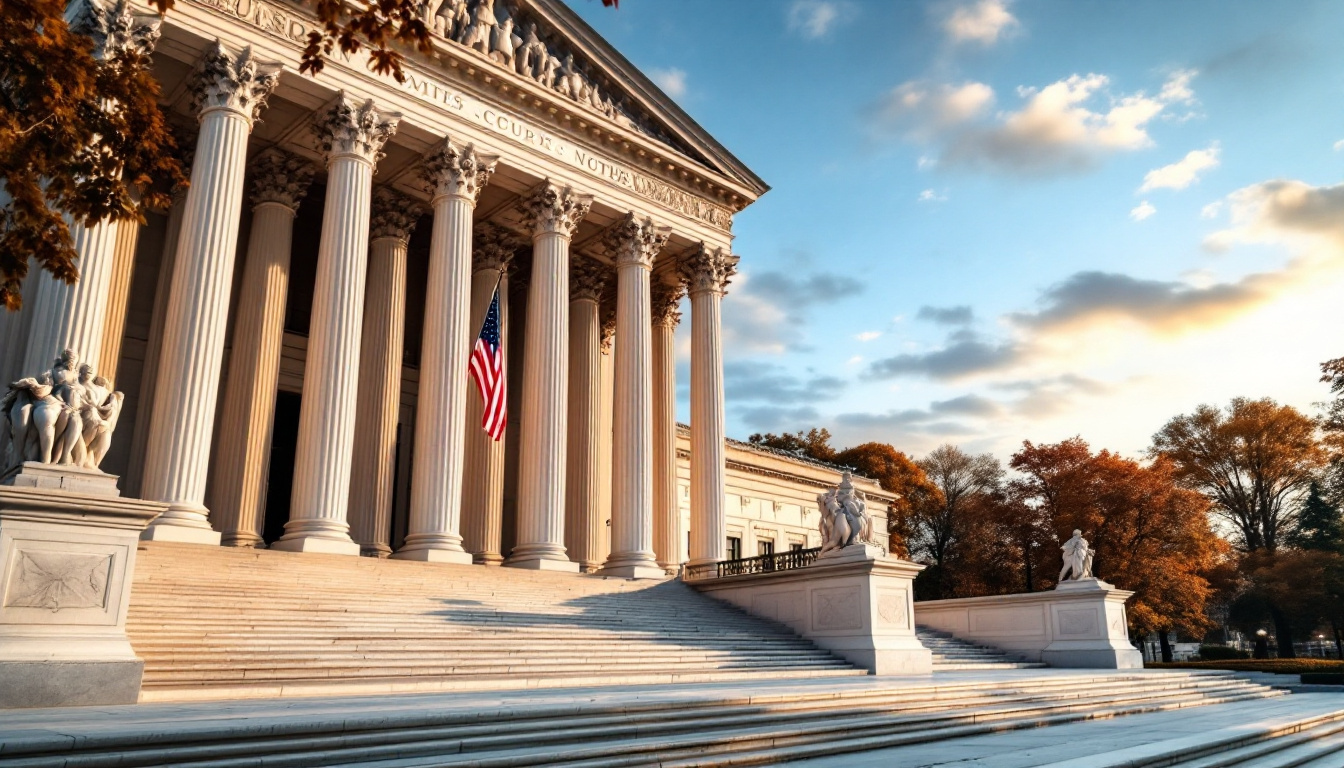
A Rockefeller-funded rally outside the Supreme Court on Monday morning, organized to show public support for Boulder County's climate lawsuit against energy companies, drew almost nobody. No Colorado state officials showed up. No federal elected officials either.
The oral arguments inside the building went about as well for them.
The case is Suncor Energy Inc. v. County Commissioners of Boulder County, docket 25-170, and it might be the most important case of the 2026 Supreme Court term. Boulder County sued Suncor Energy and Exxon Mobil seeking monetary damages under state tort law for what it called the companies' "substantial role" in "causing, contributing to and exacerbating climate change." The legal theory: Colorado state courts should be able to hold energy companies liable for global greenhouse gas emissions.
Justice Brett Kavanaugh referenced a "wall of precedent" holding that interstate air and water pollution falls under federal law — not a patchwork of state tort claims. Chief Justice John Roberts asked Boulder attorney Kevin Russell directly: "Isn't your suit an attempt to evade those decisions?"
Russell didn't have a great answer for what came next either. Roberts raised the floodgate problem: "Presumably if you prevail, the next day, a municipality in every single state will file a lawsuit." Kannon Shanmugam, representing the energy companies, put a number on it — 90,000 municipalities that could impose "catastrophic damages" if Boulder's theory holds.
Russell's response to whether Boulder's legal theory would also allow suits against gas stations and fuel distributors was revealing. "Nothing in our theory prevents that," he conceded.
That's the whole game, right there. This was never about Boulder County's weather. It's about building a legal framework where any city in America can sue any company that touches fossil fuels for damages connected to the global climate. O.H. Skinner, executive director of the Alliance for Consumers, described it plainly: "It's a Swiss Army knife for them to accomplish social change through a court system."
Principal Deputy Solicitor General Sarah Harris, arguing for the DOJ, told the justices that Boulder's suit "egregiously exceeds constitutional limits on state authority" and would allow Colorado to impose liability for fossil-fuel activity "worldwide." Justice Elena Kagan noted that Boulder's "entire causal chain" depends on allegations about global emissions increases — not anything specific to Colorado.
Former Alaska Acting Attorney General Stephen Cox framed the stakes in federalism terms. "I see this as federalism turning over on its head," Cox said, because states coordinating with activist legal organizations to impose national regulatory policy through tort suits is a different animal than the federal government overreaching into state business.
Skinner went further at The Federalist: "It's not a fight about climate science. It's a fight about whether we're going to allow this maneuver to be what reshapes American society."
The Colorado Supreme Court had ruled 5-2 that the suit could proceed in state court. The U.S. Supreme Court granted review on February 23, 2026. Justice Samuel Alito recused himself. A decision is expected by mid-2027.
Blue states tried for years to regulate the energy industry out of existence through Congress. That didn't work. So they moved to the courts — filing state-level tort suits designed to let sympathetic local juries bankrupt oil companies one verdict at a time. The Supreme Court just signaled, in open court, that the justices can see exactly what that strategy is.
Boulder's own attorney admitted his theory has no limiting principle. A decision is months away, but Monday's arguments already told the story.