
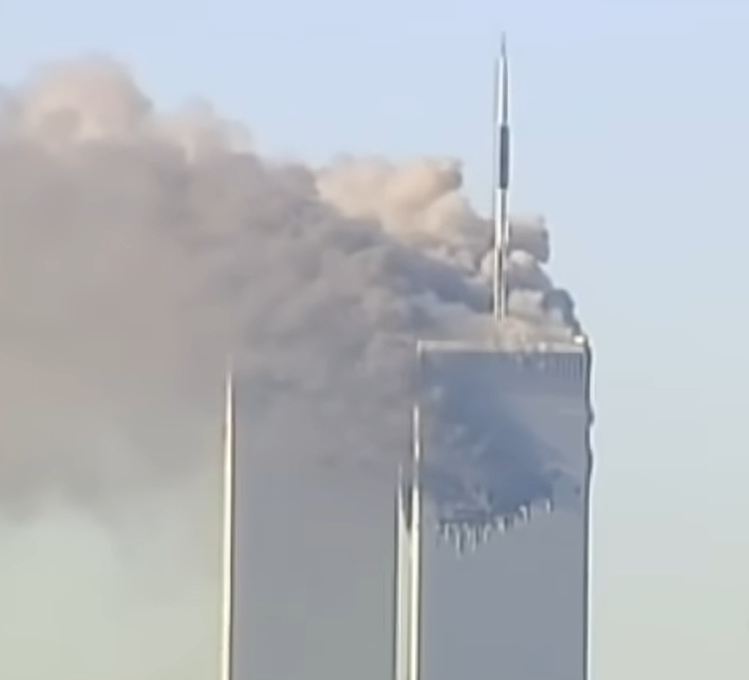
Three weeks before the 25th anniversary of September 11, an internal memo at Canada's CBC News instructed journalists to stop calling the deadliest attack on American soil what it was. The directive, first reported by Toronto Sun columnist Brian Lilley, contains a line so absurd it reads like parody: "Do not refer to the Sept. 11 attacks as terrorist attacks."
The preferred framing? "The hijackings led to passenger jet crashes." Like a fender bender with a higher body count.
The memo came from CBC News leadership, and when Lilley pressed the network on it, they didn't deny its existence. They confirmed it was real — and defended it. According to Lilley, CBC's Senior Director of Journalistic Standards and Public Trust, Basem Boshra, stood behind the language guidance. That title — "Journalistic Standards and Public Trust" — is doing some heroic lifting here, given that the directive asks reporters to strip the word "terrorism" from an event that killed nearly 3,000 people and was carried out by 19 hijackers operating under explicit orders from Al-Qaeda.
The CBC receives approximately $1.6 billion in Canadian taxpayer funding per year. As Lilley noted on social media, "As long as we give them $1.6 billion tax dollars per year, I'll pay attention to them." That's the rub. This isn't some fringe blog workshopping language theory. This is a state-funded broadcaster with a billion-dollar annual budget telling its newsroom that the coordinated mass murder of civilians by a designated terrorist organization doesn't meet the bar for the word "terrorism."
The reasoning behind the memo, to the extent any was offered, appears rooted in the same editorial reflex that has consumed Western media for two decades: the fear that calling Islamist violence what it is might offend someone. The CBC has a long history of linguistic gymnastics when it comes to terrorism — but ordering staff not to use the word for 9/11 specifically crosses into a category of its own. We're not talking about a contested drone strike or a murky border skirmish. We're talking about four hijacked commercial jets, two collapsed towers, a burning Pentagon, and a field in Shanksville, Pennsylvania.
The Toronto Sun's reporting landed the same week memorials are being planned across the United States and at Ground Zero in New York. Families who lost fathers, mothers, sons, and daughters on that Tuesday morning in 2001 are preparing to mark a quarter century of grief. And the CBC's contribution to the moment is a style guide memo ensuring its journalists won't accidentally call the people who murdered their loved ones terrorists.
The usual defense for this kind of thing is "neutrality." The argument goes that one person's terrorist is another person's freedom fighter, and responsible journalism avoids taking sides. It's the kind of logic that sounds reasonable in a graduate seminar and collapses the instant you apply it to men who flew passenger jets into office buildings at 500 miles per hour. The United Nations, the U.S. government, the Canadian government, NATO, and every Western intelligence agency on earth have designated Al-Qaeda a terrorist organization. The CBC isn't being neutral. It's being contrarian for the sake of a politics its audience didn't ask for.
Canada's public broadcaster has spent years watching its credibility erode. Trust in legacy media is at historic lows across the English-speaking world. And the institutional response, every single time, is to double down on the exact editorial posture that drove the audience away.