
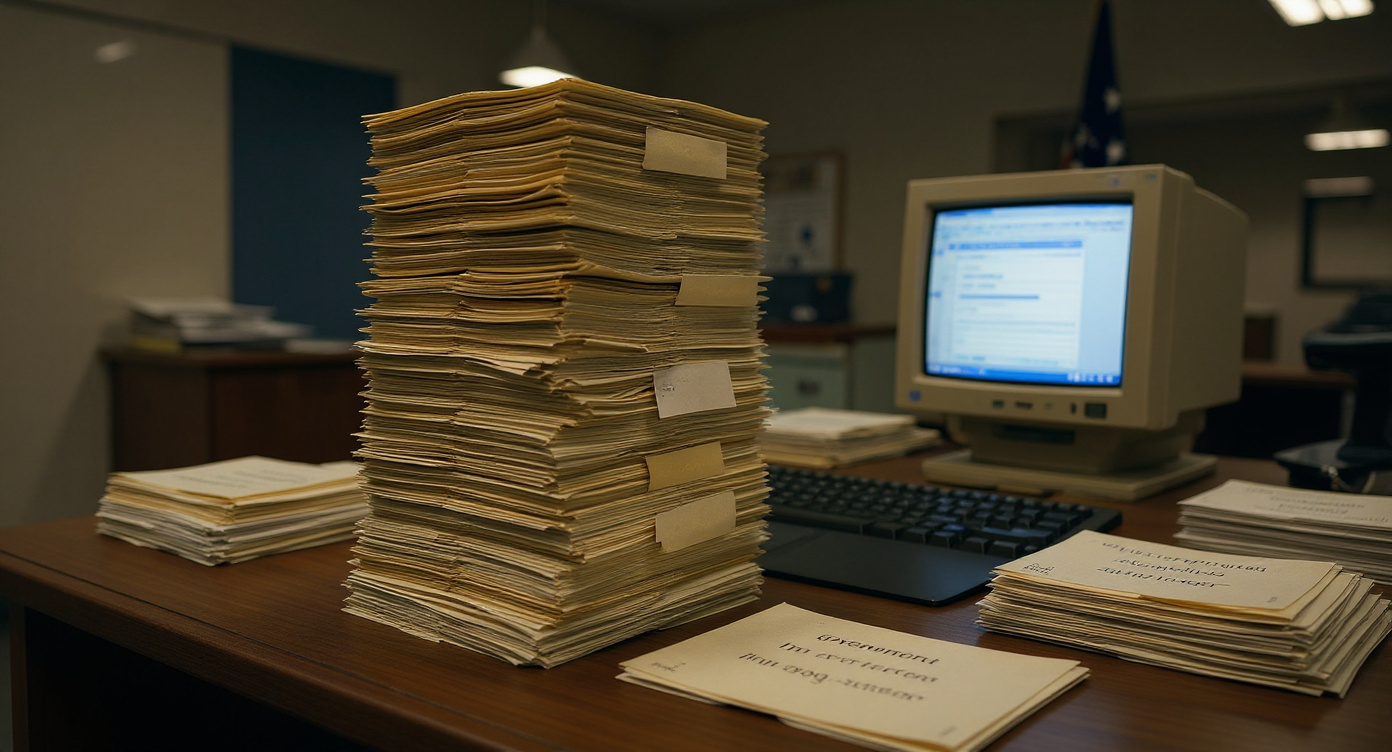
Treasury Secretary Scott Bessent stood at a podium on October 6 and announced that his department had intercepted 13,500 payments totaling $175 million in fiscal year 2026. Payments to deceased individuals. Checks cut, approved, and queued for delivery to people who no longer exist — caught only because someone finally bothered to cross-reference a list.
That list is called "Do Not Pay." It has existed for years. Until this administration, 4% of federal programs used it.
Four percent. The federal government processes $3.7 trillion in payments annually and screens 1.1 billion individual transactions. For most of its modern history, 96% of the programs writing those checks had no mechanism to verify whether the recipient had a pulse. Not a complicated algorithm. Not an AI-driven fraud detection system. A list. A list of dead people. And virtually nobody checked it.
"Treasury continues to transform how the federal government protects taxpayer dollars," Bessent said in the announcement, reported by United Voice. The word "continues" is doing a lot of heavy lifting in that sentence, given that the transformation started roughly eighteen months ago.
Bessent framed the shift in terms that should embarrass every previous Treasury secretary who served in the last two decades: "We are moving beyond 'pay and chase' and making prevention the federal government's first line of defense." The old model — send the money, then try to claw it back — was the official federal strategy. Not an oversight. Not a gap in the system. The strategy.
The numbers tell the rest of the story without editorial assistance. In July 2026 alone, Treasury identified $99 million in improper payments and stopped 4,900 individual checks. By the end of fiscal year 2026, the department estimates it will have blocked $350 million. Under Executive Order 14249, signed by President Trump in March 2025, 99% of federal programs now have access to the Do Not Pay screening system.
That's the progress in eighteen months. Now consider what came before it. The Government Accountability Office has tracked improper payments across 71 federal programs and found $236 billion in bad payments in fiscal year 2023 alone. Since 2003, the cumulative total has reached $2.7 trillion. Trillion, with a T. Exposed over more than two decades of GAO reports, acknowledged by both parties, and addressed by exactly none of them until a president who ran on cutting waste actually signed the order.
The Social Security Administration was one of the worst offenders — an agency that literally maintains its own death records and still managed to keep sending money to people on its own deceased list. The bureaucratic explanation is that different systems don't talk to each other. The honest explanation is that nobody had an incentive to stop the bleeding. Every dollar paid out is a dollar that justifies next year's budget request. Every improper payment caught is a line item that makes someone's department look bad.
The "pay and chase" model Bessent described wasn't incompetence. It was architecture. The system was designed to prioritize speed of disbursement over accuracy of disbursement, because the political cost of a delayed payment to a living person was always higher than the political cost of a payment to a dead one. Dead people don't call their congressman.
$2.7 trillion since 2003. $236 billion in a single year. And the solution — a screening list that already existed — took a presidential executive order to implement across 99% of federal programs.
The Do Not Pay list was sitting right there the entire time. Twenty-three years and $2.7 trillion later, someone finally opened it.