
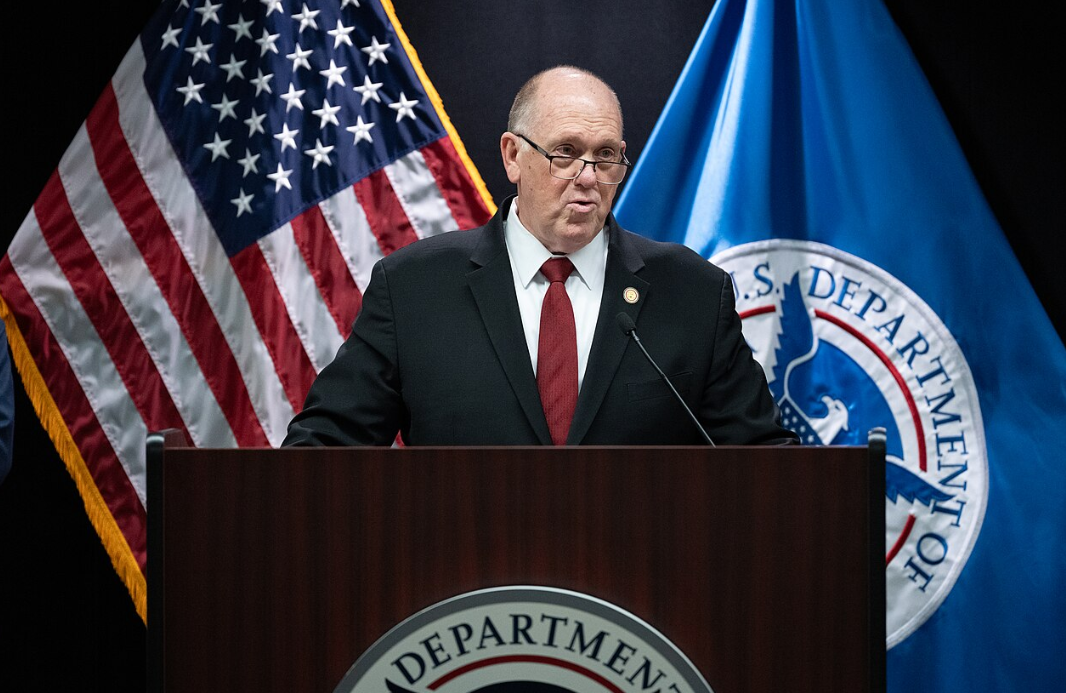
"Give me an example of where we went too far."
That was Border Czar Tom Homan's response when asked about accusations that the Trump administration's immigration enforcement has been too aggressive. Nobody gave him one.
Immigration enforcement may be President Trump's single most significant policy achievement. Border crossings are measurably down. Deportation numbers are up. ICE is focusing its resources on aliens with criminal records beyond illegal entry or visa overstays. The machinery is working, and the people who said it couldn't be built are pretending it doesn't exist.
Homan isn't hiding from the hard cases. When pressed on Renee Good, who died in January 2026 during an immigration enforcement action, Homan didn't deflect. "I don't want to see any tragedies happen. I wish Renee Good was alive today," he said. He also named Alex Pretti, another death that critics have tried to pin on enforcement operations. He addressed both directly — and then made the point that critics never want to engage with: "Everybody we arrest has an opportunity to see a judge and plead their case."
Due process isn't being skipped. It's being enforced alongside immigration law for the first time in years.
The legal architecture supporting the enforcement push has been tested in court — repeatedly. Nine of thirteen federal circuit courts have ruled that the administration's detention practices violate federal law, specifically the Illegal Immigration Reform and Immigrant Responsibility Act of 1996. The Fifth and Eighth Circuits ruled in the administration's favor. The split virtually guarantees the Supreme Court will take the case, with a ruling expected by June 2027. Chief Justice John Roberts will preside over a court that has to decide whether a law passed thirty years ago means what it says.
Florida Representative Maria Elvira Salazar has been one of the more vocal Republican voices pushing for enforcement that accounts for longtime residents and mixed-status families. That position gets framed as a crack in the coalition. It isn't. Salazar supports enforcement. She's arguing about emphasis, not direction. The debate within the Republican caucus is about how to enforce immigration law, not whether to enforce it. Democrats can't say the same about their own party.
After former DHS Chief Kristi Noem departed the agency in March 2026, the transition could have slowed things down. It didn't. Director Markwayne Mullin stepped into the vacuum and the enforcement tempo not only held but has continued to ramp up. The infrastructure Trump built wasn't dependent on one appointee — it was embedded in policy, in operational directives, in the culture of the agencies doing the work.
Homan's challenge to critics lands because it's specific. He's not asking whether people feel uncomfortable about enforcement. He's asking for a concrete example of overreach. The silence in response tells you everything about the strength of the opposition's case.
"If you're in the country illegally, you got a problem," Homan said. "You shouldn't be here."
Nine circuits say the detention policy goes too far. Two say it doesn't. The Supreme Court will decide by June 2027. The enforcement continues either way.