
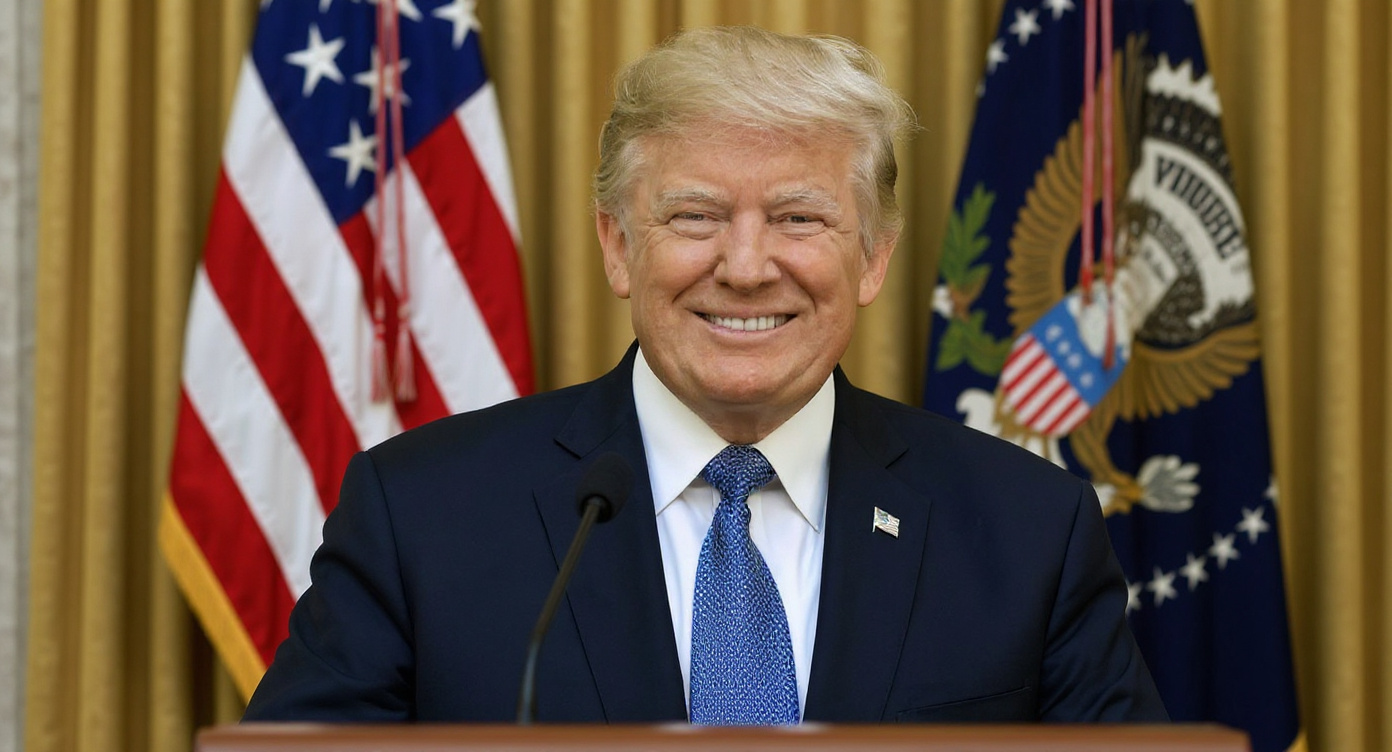
On Saturday, President Trump posted six sentences on Truth Social. By Sunday evening, British Prime Minister Sir Keir Starmer was standing behind a podium at Downing Street, appearing on the verge of tears, announcing his resignation.
The post aged like fine wine — in about twenty-four hours.
"Keir Starmer will resign as Prime Minister of The United Kingdom," Trump wrote on June 21. "He failed badly on two very important subjects — IMMIGRATION AND ENERGY (OPEN NORTH SEA OIL!). I wish him well!" One day later, that prediction became a fact. Starmer confirmed he would step down, triggering a Labour leadership contest set to begin July 9, with a new prime minister expected by September when Parliament returns from summer recess.
Starmer tried to frame it on his terms. "Six years ago, I inherited a Labour Party that was politically, financially, and morally bankrupt," he said. "Every decision I have taken has been about putting the country I love first." Noble words. The numbers tell a different story.
Labour hemorrhaged 1,500 local council seats in May 2026. More than 100 of Starmer's own MPs had demanded his resignation by the morning of the announcement. Reform UK, led by Nigel Farage, had topped national polls for over 300 consecutive surveys. Labour's 2024 "landslide" victory was already a mirage — the party actually received 500,000 fewer votes than it did in its 2019 loss. Voters didn't choose Labour. They rejected the Conservatives. And when they realized what they'd actually bought, the returns started pouring in.
The collapse wasn't subtle. Labour bled support to Reform UK on the right, to the Greens on the left, and to pro-Gaza Muslim independent candidates in urban seats. Starmer managed to unite every possible faction — against himself. During the Iran conflict, he initially restricted U.S. military base access to "defensive" operations only, a move that did not go unnoticed in Washington. As former Daily Mirror editor Piers Morgan put it, Trump's Truth Social prediction was the "final humiliation" for a prime minister already circling the drain.
The White House hadn't exactly been subtle about its assessment either. Back in March, Trump remarked that Britain was a "once great ally" but that in Starmer, America was "not Winston Churchill that we're dealing with." That's the diplomatic version.
Andy Burnham, the Mayor of Manchester who just won the Makerfield by-election with 55% of the vote, is the frontrunner to replace Starmer. Burnham describes himself as a socialist and has called American politics "poisonous." So the Labour Party's answer to collapsing under the weight of failed progressive policy is to install someone who'll lean harder into progressive policy. Meanwhile, Starmer set his own months-long departure timetable rather than leaving immediately — protesters outside Downing Street played Beethoven's "Ode to Joy," the EU anthem, as he spoke.
No constitutional obligation forces a new election until 2029. Farage is already demanding one "at the soonest possible date." Labour, naturally, would prefer to skip that particular conversation.
Trump didn't break any news. He just said out loud what the polls, the local election results, and 100-plus Labour MPs were already screaming. The difference is that when Trump says it on Truth Social, the whole world has to acknowledge it happened.
Starmer gave Labour two years and a landslide majority. He's leaving behind a party polling behind a man named Nigel.