
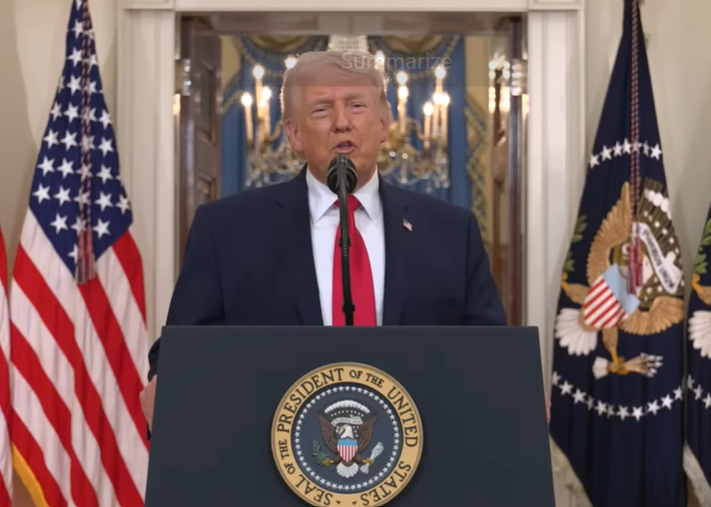
Three million tons of diesel fuel. That's the deal President Trump struck with Russia — a phased supply agreement starting at 300,000 tons, scaling to 500,000, then a million, with the goal of driving down fuel prices for American farmers, ranchers, and truckers before winter hits.
Seven senators called it illegal.
The bipartisan group — four Republicans, three Democrats — issued a joint statement on October 10 declaring that "Congress explicitly banned Russian energy imports in 2022 to prevent American dollars from financing Putin's brutal war against Ukraine." Senator Lisa Murkowski of Alaska added that "we can discuss Russia's return to global energy markets once the war is over, but in the meantime, we need to cut off everything fueling it."
Senator Thom Tillis of North Carolina went further. Appearing on NBC's Meet the Press, Tillis said he believes "there's a legitimate case for saying the president's not following the law."
Trump responded on Truth Social with the kind of math problem Washington can never seem to solve when it involves Europe.
"The European Union paid Russia 250 Billion Dollars for Energy, and the Fake News Media doesn't want to get near that story," Trump wrote. "I made the right choice for the American People — ALWAYS, AMERICA FIRST!"
That $250 billion figure is real. While American politicians were lecturing the world about isolating Moscow, the European Union kept writing checks for Russian gas and oil — checks that dwarfed anything in Trump's diesel agreement by orders of magnitude. The same Congress that passed the 2022 ban on Russian energy imports never held a single hearing on why our NATO allies were bankrolling the war they claimed to oppose.
Murkowski's framing — "cut off everything fueling it" — is worth examining for about ten seconds. The 2022 ban applied to American purchases of Russian energy. It said nothing about European purchases. It imposed no penalties on allies who continued buying. It was, in practice, a rule that applied only to the country that needed Russian energy the least and exempted the countries that needed it the most. Congress patted itself on the back and moved on.
Now those same senators are outraged that Trump temporarily lifted sanctions to secure diesel supply for the domestic market — the people who actually haul American grain, stock American shelves, and heat American homes. The concern isn't about financing Putin. If it were, the letter would have been written to Brussels four years ago.
The timing matters. November 3 is three weeks away. Diesel prices hit truckers and farmers harder than almost any other input cost, and both groups vote. A bipartisan coalition objecting to cheaper fuel for working Americans right before midterms is a coalition that has done the political math and decided Washington credibility matters more than the price at the pump.
Tillis, Collins, Murkowski, Curtis — these aren't backbenchers. They're the Republican senators who reliably show up when the establishment needs a few GOP votes to block the president's agenda. Senators Jeanne Shaheen, Richard Blumenthal, and Ron Wyden round out the group, which tells you everything about where the Overton window sits on this particular letter. When your Republican signatories are indistinguishable from your Democratic ones, the objection isn't bipartisan. It's uniparty.
The 2022 ban was passed during a specific moment — Russia had just invaded Ukraine, energy markets were in chaos, and the political cost of opposing sanctions was zero. The strategic landscape in October 2026 looks different. Iran's nuclear program is accelerating. Control of the Strait of Hormuz is an open question. Diesel supply chains are tighter than they've been in years. Trump looked at the board and made a move.
Seven senators looked at the same board and wrote a letter.
Europe paid Russia $250 billion. The letter was 212 words.