
Fifty percent. That's the tariff rate sitting on Canadian goods right now. Twenty billion dollars worth of steel, automobiles, and other exports — all subject to a levy that Canadian Prime Minister Mark Carney swore he'd never negotiate under.
He's negotiating.
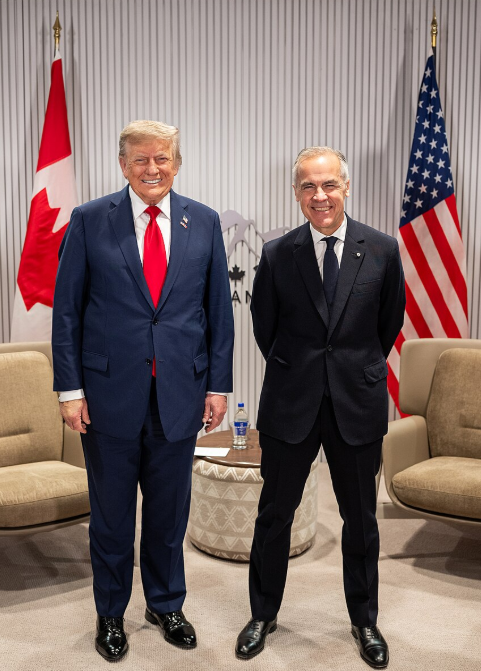
President Trump announced on November 1st that the United States and Canada are "very close" to reaching a new trade deal, just weeks after formal negotiations collapsed. "We have the concept of a very good deal with Canada," Trump said. "We are now very close to having a deal."
Carney, for his part, confirmed the talks in his own way — the diplomatic equivalent of acting like you meant to call the person back all along. "Good conversation with President Trump on the future of Canada-U.S. trade," Carney posted, adding the deal would create jobs, boost affordability, and respect Canada's "languages, culture, and sovereignty."
When the previous talks fell apart, Carney walked away insisting Canada wouldn't be bullied. He launched a new trade alliance with China and the European Union, presumably to show Washington that Ottawa had options. The message was clear: Canada doesn't need the United States.
Then the phone rang and Carney picked up on the first ring.
The Keystone XL pipeline is reportedly a central negotiation point, which tells you everything about how much ground has shifted since Joe Biden revoked the pipeline's permit in 2021. Trump has proposed Canadian involvement in financing the project — turning a symbol of Biden-era climate posturing into a joint economic engine. Five years ago, killing Keystone was progressive gospel. Now the Canadian prime minister is at the table discussing how to help build it.
Border states like Michigan and Maine are feeling the tariff squeeze hardest, and the political math isn't complicated. Michigan's Republican Senate candidate Mike Rogers has made the trade war a campaign issue heading into Tuesday's midterms. Canadian Conservative leader Pierre Poilievre has hammered Carney for months over the economic fallout on the northern side of the border. Both leaders needed movement. One of them created it.
Carney's EU pivot lasted roughly seventy-two hours before he was back on a call with Trump. The European alliance wasn't leverage — it was a participation trophy. The EU buys a fraction of what the U.S. does from Canada, and everybody in Ottawa knows it. You don't replace your biggest customer by announcing a deal with a smaller one. You just make headlines for a weekend.
No final agreement exists yet. Talks will continue in the coming weeks, and the details on steel, automobiles, and Keystone financing still need to land on paper. But the trajectory is the one Trump set when he imposed the tariffs: make the cost of not dealing higher than the cost of dealing.
In August, Carney said he'd never negotiate under pressure. In November, he called it a "good conversation."