
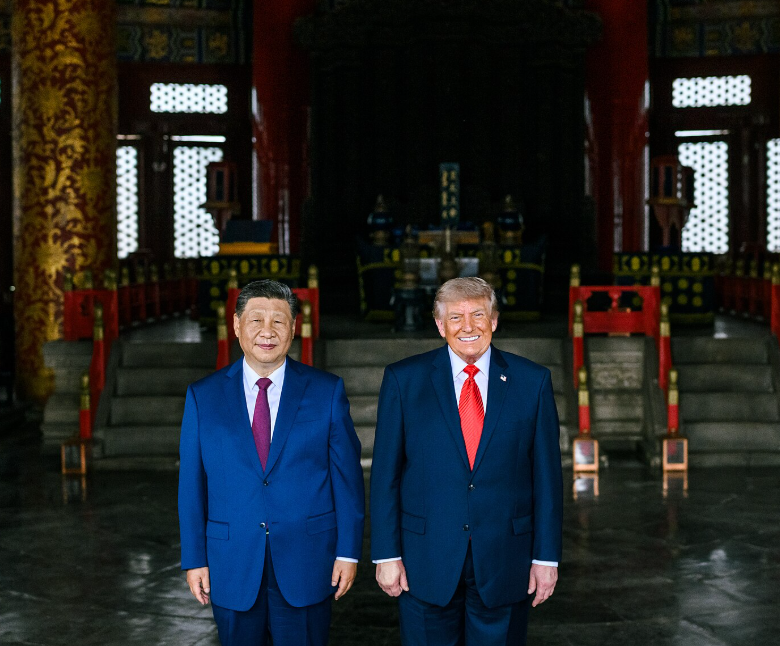
Thirty billion dollars. That's the size of the reciprocal tariff reduction President Trump and Chinese President Xi Jinping just agreed to after a three-day summit in Washington. American agricultural products, fish, seafood, logs, cosmetics, and medical devices all get favorable treatment heading into China. Chinese small appliances, toys, holiday decorations, and children's car seats get preferential rates coming here.
Not symbolic. Not a handshake photo-op. Real goods, real supply chains, real money.
The deal was completed just after President Trump and President Xi's three day meeting in Washington. U.S. Trade Representative Jamieson Greer told CNBC there are "a lot more details," which suggests the framework is even broader than what's been made public. Treasury Secretary Scott Bessent is involved in discussions about extending the agreement's terms.
Here's what makes this worth understanding: the path to this table was eighteen months of escalation that the entire commentariat said would end in catastrophe. In February 2025, Trump imposed a 10% tariff on all Chinese imports. By April 2025, U.S. tariffs peaked at 145%. China fired back with rates up to 125%. Every cable news economist had a graphic ready to explain why your grocery bill was about to triple.
Then Geneva happened. A 90-day truce in May 2025 brought the U.S. rate down to 30% and China's to 10%. That truce got extended another 90 days in August 2025. Then came the South Korea talks in October 2025, which produced a tentative agreement on fentanyl precursors, soybean purchases, and rare-earth exports — three areas where China had been using access as leverage for years.
Every single step followed the same pattern. Trump escalates. The experts panic. The media runs "trade war" segments with ominous music. Then a deal materializes that's better than what existed before the escalation started.
The fentanyl precursor piece alone would have been a headline achievement for any other president. China has been the primary source of the chemicals that Mexican cartels use to manufacture fentanyl, and getting Beijing to the table on that issue — not through a sternly worded letter from the State Department, but through economic pressure that actually hurt — is the kind of result that happens when your trade negotiator has more tools than a politely worded communiqué.
The "experts" who spent 2025 predicting economic ruin from Trump's tariff strategy have gotten remarkably quiet. Not a single retraction from the analysts who said 145% tariffs would crash the stock market. Not one correction from the columnists who called the Geneva truce a "face-saving retreat." The retreat, apparently, involved getting China to lower tariffs on $30 billion in American goods.
What the coverage keeps skating past is the list itself. Agricultural products and medical devices aren't random categories — they're sectors where American producers have been locked out or undercut by Chinese trade policy for decades. Getting favorable treatment for U.S. medical device manufacturers in the Chinese market is a structural shift, not a one-quarter bump.
The other side of the ledger matters too. Toys, holiday decorations, children's car seats — these are consumer goods where lower import costs land directly in American household budgets. The deal isn't an abstraction that benefits Fortune 500 trade desks. It's the price of a car seat at Target.
Greer said Monday will bring more details. Bessent is reportedly working on the extension framework. The South Korea talks already locked in progress on fentanyl precursors and rare-earth exports.
Eighteen months ago, the tariff rate on Chinese goods was 145%. Today it's producing bilateral reductions worth $30 billion. The people who called that strategy reckless are welcome to update their models.