
The G20 Innovation Ministerial wrapped up in Chapel Hill, North Carolina, and the participating nations — including China and Russia — agreed to a set of principles that sound like they were drafted in a Trump Tower conference room. They're called the Carolina Principles. Invest. Build. Commercialize. Deploy.
Notice what's missing from that list? Regulate. Restrict. Form a committee.
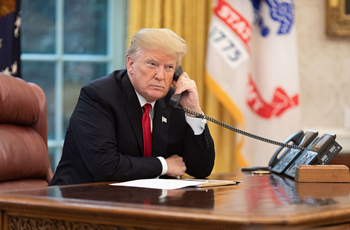
President Trump took to Truth Social on September 4 to announce the outcome, writing, "We are NUMBER ONE in Tech, and NUMBER ONE in A.I. — BY A LOT! The World is learning from the BEST." Subtlety has never been the man's strong suit. But when you've just gotten the world's largest economies to endorse your framework for emerging technology — on American soil, no less — you've earned the caps lock.
The two-day summit was led by Commerce Secretary Howard Lutnick and Office of Science and Technology Policy Director Michael Kratsios. Trump described it as a "very productive and historic two days" and said the pair "led a tremendously successful meeting." The result was a unified endorsement of what amounts to a pro-commercialization, anti-bureaucracy approach to artificial intelligence governance.
That framework stands in sharp contrast to the European Union's approach, which has spent the last several years building the most comprehensive — and most restrictive — AI regulatory apparatus on the planet. Brussels wants licensing requirements, risk classifications, and compliance officers. The Carolina Principles want companies to build things and sell them.
Trump added that "everyone agreed" on the principles, which is the kind of diplomatic language that usually means someone got steamrolled. When the U.S. hosts a tech summit in the Research Triangle and walks out with a consensus document that reads like a free-market manifesto, it's not hard to guess who set the agenda.
Milton Friedman once said, "The great achievements of civilization have not come from government bureaus." He also observed that "the only cases in which the masses have escaped from grinding poverty are where they have had capitalism and largely free trade." The Carolina Principles aren't quoting Friedman by name. They don't have to.
China signed on, which is the detail worth watching. Beijing has poured billions into AI development while simultaneously using the technology for surveillance and social credit enforcement. Agreeing to a framework that emphasizes commercialization over state control is either a strategic concession or a bet that they can outbuild everyone regardless of the rules. Either way, it's a framework authored in America, not Beijing.
The European delegation agreed too, which means the continent that spent years crafting the AI Act — a regulatory document so dense it practically requires its own AI to interpret — just nodded along to a set of principles that could fit on a napkin.
Left-wing tech policy groups will inevitably argue that the Carolina Principles lack enforcement teeth and amount to a deregulatory giveaway. Which is a curious objection to raise about a framework that every G20 nation just voluntarily endorsed. If the principles were toothless, the signatories wouldn't have bothered negotiating them. If they were a giveaway, China wouldn't have signed.
The broader pattern is unmistakable. Under the previous administration, the U.S. approach to AI was an executive order heavy on "safety" language and light on commercial strategy. Under Trump, the U.S. just hosted the world's top economies and walked away with a consensus document that treats American technological dominance as the starting point, not the aspiration.
The Carolina Principles tell every AI company in the world the same thing: build it here, sell it everywhere, and Washington won't be the obstacle.
That used to be the default American position on innovation. Apparently it took a G20 summit to remind everyone.