
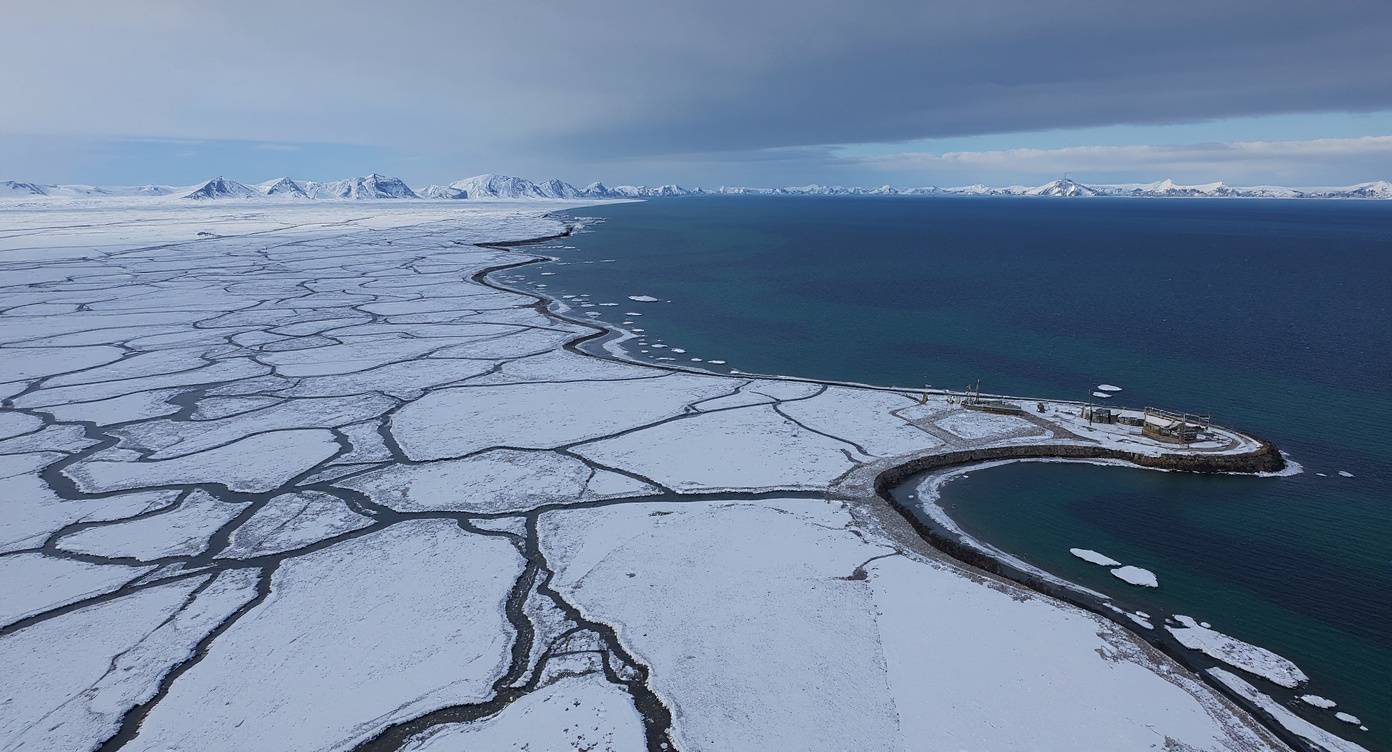
The official name is the "Infinite Life Agreement." No expiration date. Permanent U.S. military access, basing, and overflight rights on Greenland, with the ability to build additional installations as needed — without requiring approval from Denmark or Greenland's government. Consultation only.
The cost to American taxpayers is zero.
President Donald Trump announced the deal on September 18 after months of quiet negotiations that began in February. Secretary of State Marco Rubio called it "a huge win for the United States and the American people" and added that "Greenland will forever be part of the strategic defense area of North America."
The agreement doesn't transfer sovereignty — Greenland remains under the Kingdom of Denmark. What it does is lock in something more operationally useful than a flag swap: permanent strategic positioning in the Arctic at a moment when the Arctic matters more than it has since the Cold War. The U.S. already operates Pituffik Space Base on Greenland under a defense agreement dating back to 1951. This deal replaces the old framework with one that has no sunset clause and expanded authority.
The terms bar China, Russia, and all non-NATO countries from establishing military bases on the island. They also restrict adversary nations from investing in sensitive sectors — telecommunications, undersea cables, ports, and critical minerals. That last category is the quiet headline. Greenland sits on rare earth deposits that Beijing has been eyeing for years. The door just closed.
Trump posted on Truth Social that "for over 100 years, Presidents have known the strategic importance of Greenland, but NONE of them were able to do anything about it." The caps lock is his, but the history checks out. Harry Truman offered to buy Greenland in 1946 for $100 million in gold. The State Department studied acquisition scenarios during the Cold War. Multiple administrations recognized the strategic value and none of them moved.
The media response in 2019 when Trump first floated the idea was predictable. Late-night hosts did bits. Foreign policy commentators called it unserious. Denmark's prime minister at the time called the idea "absurd." The word got heavy rotation. Seven years later, the U.S. has permanent military rights on the island, the ability to build new bases without asking permission, and a framework designed to survive Greenland's potential independence from Denmark.
Rubio and the State Department negotiated the deal across multiple rounds with both Danish and Greenlandic officials. The agreement was structured so that if Greenland eventually becomes an independent nation, the military rights remain in effect — a detail that suggests the negotiators were thinking several moves ahead.
The Arctic is warming. Shipping lanes that were frozen year-round are opening. Russia has built or rebuilt over 50 military facilities above the Arctic Circle in the last decade. China declared itself a "near-Arctic state" in 2018, a geographic claim that requires creativity with a globe. The strategic competition for the top of the world is not theoretical. It's the reason this deal exists.
What Trump got without firing a shot or spending a dollar: permanent basing rights, adversary exclusion, critical mineral protection, and an agreement that outlasts his presidency, the next presidency, and every presidency after that.
The 1951 agreement lasted 75 years. This one has no number to count down from.