
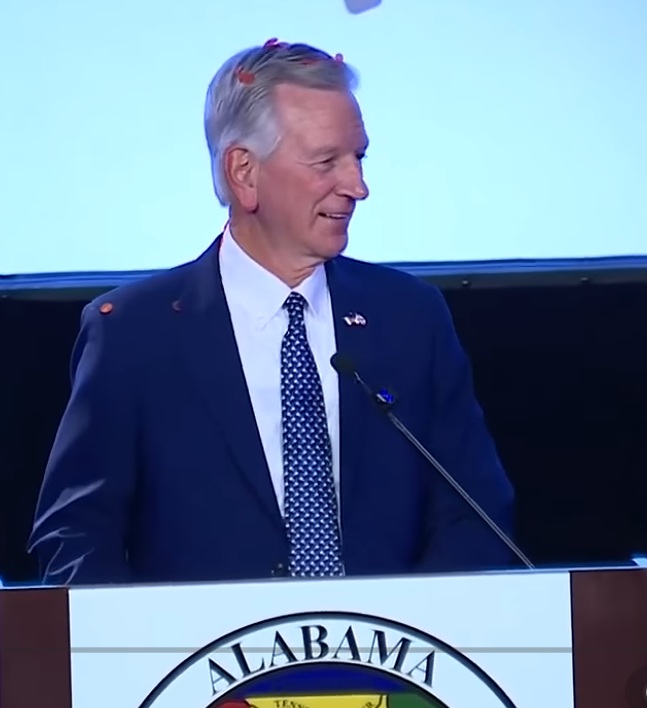
Tommy Tuberville beat Doug Jones by five points — 52% to 47% with 91% of precincts reporting — to become Alabama's next governor. If the matchup sounds familiar, it should. Tuberville sent Jones packing from the U.S. Senate in 2020. Jones apparently wanted a rematch.
He got one.
Decision Desk HQ called the race on election night: "Decision Desk HQ projects Tommy Tuberville wins the AL Governor General Election." Jones, the former one-term Democratic senator whose entire political identity was built on a single special election fluke, decided the best use of his time was running for governor in one of the reddest states in America. The result was exactly what you'd expect from a Democrat trying to win statewide in Alabama without a Republican scandal to ride.
Tuberville replaces term-limited Governor Kay Ivey, and the transition keeps the governor's mansion firmly in GOP hands without so much as a competitive race. The five-point margin actually understates how lopsided this was — Jones never led in a single public poll after Labor Day, and Democratic outside groups quietly pulled ad spending from the state in October.
Meanwhile, the Senate seat Tuberville vacated didn't stay empty for long. U.S. Representative Barry Moore, who represented Alabama's 1st Congressional District, cruised past Democrat Everett Wess to claim the seat. The congressional delegation holds at a 6-to-1 Republican configuration, with only the state's single majority-minority district — represented by Democrat Shomari Figures in the 2nd and Terri Sewell in the 7th — breaking the pattern.
The Supreme Court's ruling in Louisiana v. Callais back on April 29 cleared the way for Alabama's legislature to use its 2023 redistricting map, which locked in the structural advantage Republicans already held. Democrats challenged the maps. The Court said no. The voters confirmed it.
Democrats spent real money trying to make Alabama competitive this cycle. National groups floated Jones as a "moderate voice" who could appeal to suburban voters shifting left. The theory required Alabama suburbs to behave like Atlanta suburbs, which required ignoring everything about Alabama. Jones ran on healthcare expansion and education funding — a platform that works in a focus group and dies at the ballot box in a state where Trump won by 25 points.
Former Representative Jerry Carl reclaimed the AL-01 seat Moore left behind, while Mike Rogers, Robert Aderholt, Dale Strong, and Gary Palmer all held their districts without breaking a sweat. The entire Alabama delegation came back Republican-dominated.
Tuberville spent his Senate tenure holding up Pentagon nominations over the military's abortion travel policy, earning him approximately zero friends in Washington and a massive approval rating back home. The same instinct that drove establishment Republicans crazy — the willingness to use procedural leverage and not care who complained — is exactly what Alabama voters just promoted him for.
Doug Jones lost to Tuberville in 2020. He lost to Tuberville in 2026. The margin was wider the second time.